Scaling and root planing is a deep-cleaning treatment used to remove plaque and tartar from below the gumline and smooth the root surfaces of the teeth. It may be recommended when gum disease has progressed beyond what can be managed with a routine dental cleaning.
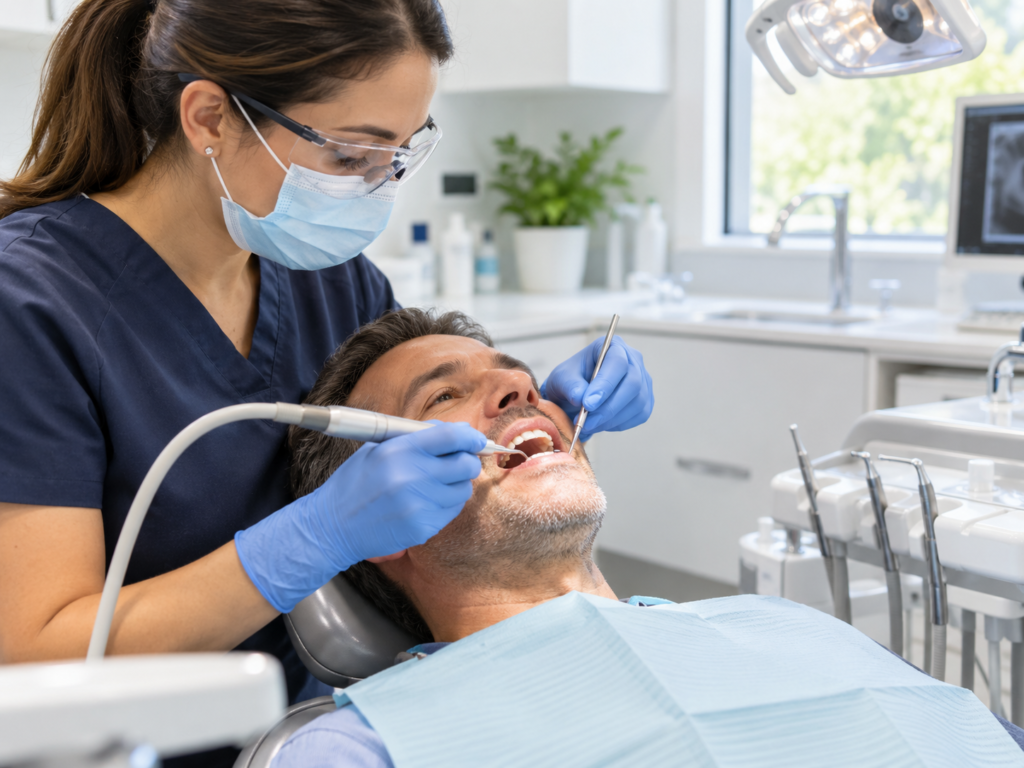
Scaling and root planing is a deeper type of dental cleaning used when plaque and tartar have accumulated below the gumline.
During treatment, buildup is removed from the tooth and root surfaces, and the roots are smoothed to help create a cleaner environment around the gums. The goal is to help manage gum disease and reduce inflammation around the teeth.
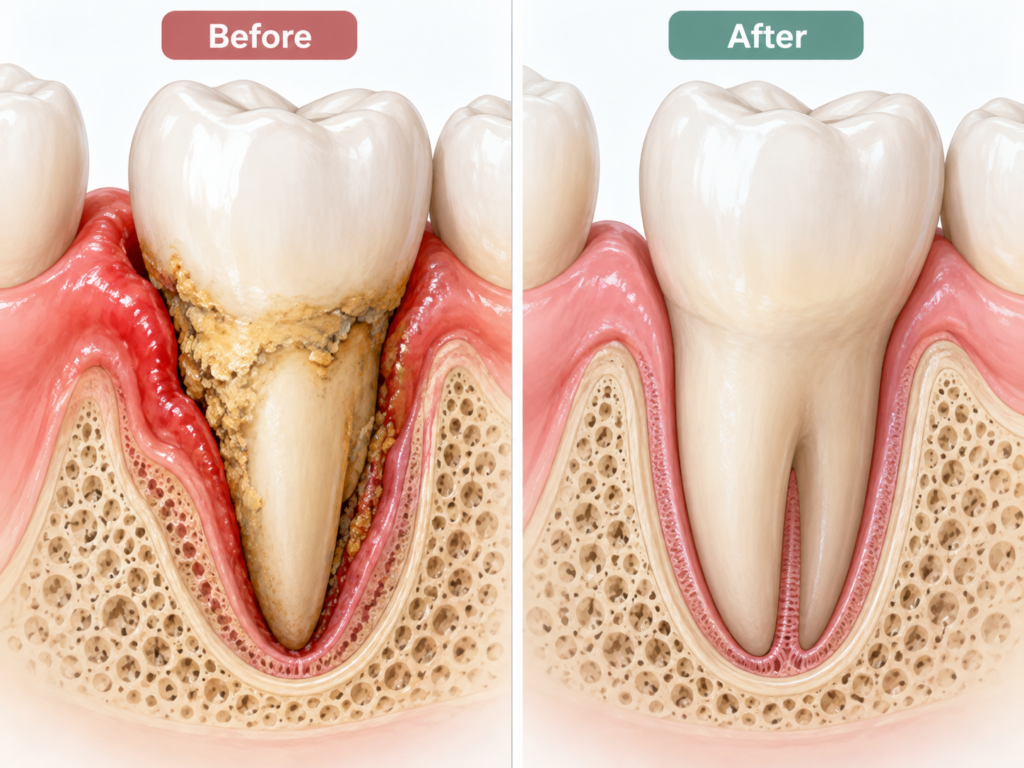
Treatment is typically completed in sections of the mouth based on the condition of the gums and the amount of buildup present.
Your dentist or hygienist will examine the gums and measure the spaces around the teeth to determine where deeper cleaning may be needed.
Plaque and tartar are carefully removed from the tooth and root surfaces below the gumline.
The root surfaces are smoothed to help reduce areas where bacteria and buildup can collect.
Your dentist may recommend deep cleaning when signs of gum disease are present below the gumline or when a routine cleaning is no longer enough.
Deeper spaces between the teeth and gums can make it easier for plaque and bacteria to collect below the gumline.
Hardened buildup beneath the gums cannot be removed with normal brushing or flossing and may require professional treatment.
Persistent gum inflammation or bleeding may be associated with periodontal disease and may require deeper cleaning.
Changes in the tissues or bone supporting the teeth may indicate a need for periodontal treatment.
Deep cleaning is different from a routine dental cleaning, and follow-up care is often an important part of treatment.
Treatment May Be Completed in More Than One Visit
Depending on how much of the mouth requires treatment, scaling and root planing may be completed in multiple appointments.
Local Anesthetic May Be Used
The gums may be numbed during treatment to help keep you comfortable while deeper areas are cleaned.
Temporary Sensitivity Can Occur
Some patients experience temporary gum tenderness or tooth sensitivity after treatment.
Maintenance Is Important
Regular periodontal maintenance and good home care may be recommended to help manage gum disease over time.
Maintaining healthy gums often involves a combination of professional treatment, preventive care, and ongoing monitoring.
Regular exams help your dental team monitor the health of your teeth, gums, and supporting structures.
Routine cleanings help remove plaque and tartar before they contribute to more advanced gum problems.
Oral cancer screening is often included as part of a comprehensive preventive dental evaluation.
Schedule an evaluation at Total Care Dental & Orthodontics to find out whether scaling and root planing or another type of periodontal care may be appropriate for you.
