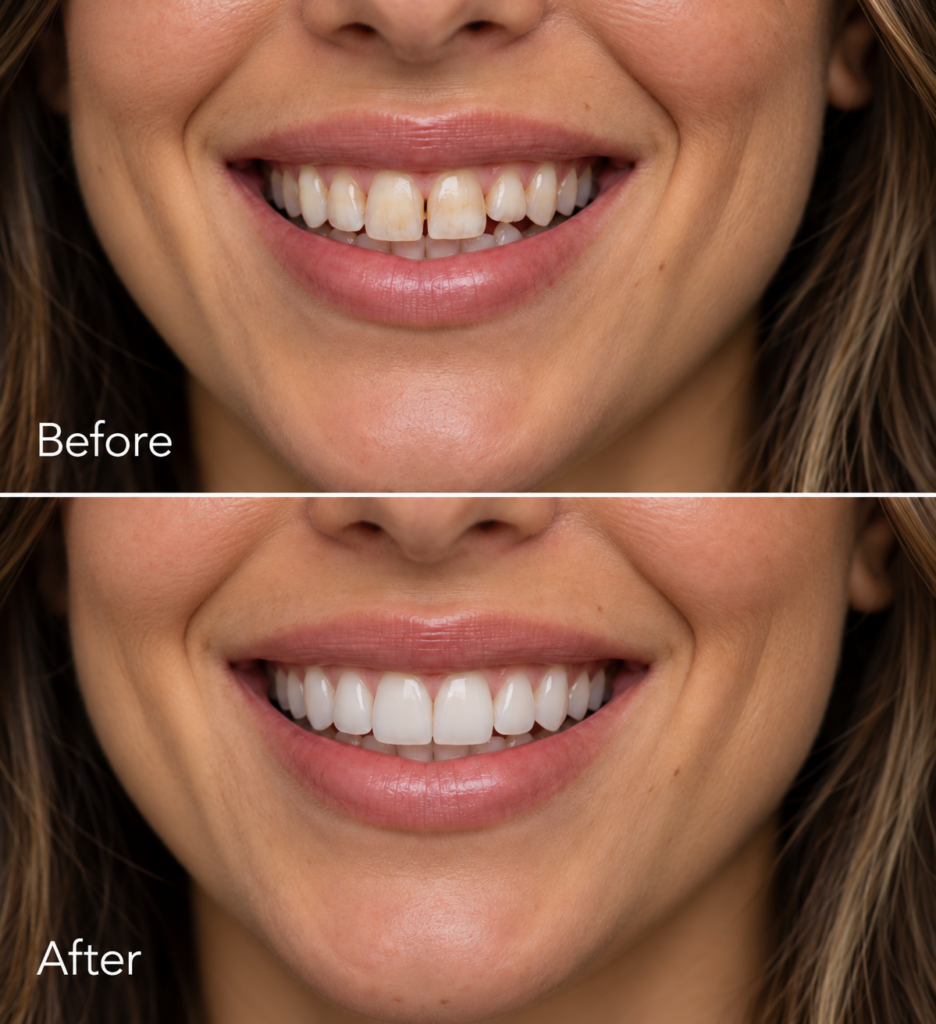
Dental veneers are thin, custom-made shells designed to improve the appearance of teeth that are chipped, discolored, worn or unevenly shaped. Our dentists can help determine whether veneers are an appropriate option for your smile.

Dental veneers are thin, custom-made shells that are bonded to the front surface of the teeth to improve their appearance. They are commonly made from porcelain or other tooth-colored materials and are designed to blend naturally with your smile.
Veneers may be used to improve the appearance of teeth that are chipped, worn, discolored, unevenly shaped or separated by small gaps. Because every smile is different, your dentist will evaluate your teeth and discuss whether veneers are appropriate for your needs and goals.
The veneer process typically involves a few carefully planned steps to create a natural-looking result that fits your smile.
Your dentist will examine your teeth, discuss your cosmetic goals, and determine whether veneers are an appropriate treatment option.
A small amount of enamel may be removed from the front of the tooth. Impressions or digital scans are then taken so your veneers can be custom-made.
Once your veneers are ready, they are bonded to the teeth and adjusted for fit, appearance, and bite.
Veneers can address several cosmetic concerns at once and are designed to create a natural-looking, balanced smile.
Veneers can help improve the appearance of teeth that are chipped, worn or unevenly shaped.
They can help mask discoloration that may not respond well to traditional whitening.
Veneers may be used to improve the appearance of small spaces between front teeth.
Custom veneers are designed to blend with surrounding teeth and improve overall smile symmetry.
Dental veneers can be a good cosmetic option for some patients, but they are not the right choice for everyone. Your dentist will evaluate your teeth, bite, oral health and cosmetic goals before recommending treatment.
Some Enamel May Be Removed
Preparing a tooth for a veneer may require removing a small amount of enamel, so the treatment is generally considered irreversible.
Healthy Teeth & Gums Are Important
Existing decay, gum disease or other dental concerns may need to be treated before veneers are placed.
Veneers Still Require Routine Care
Good brushing, flossing and regular dental visits remain important for the health of the teeth and gums around the veneers.
Veneers Can Wear or Become Damaged
Like natural teeth and other dental restorations, veneers can chip, wear or eventually need repair or replacement.
Depending on your goals, your dentist may recommend veneers or another cosmetic treatment to help improve the appearance of your smile.
Professional whitening can help brighten teeth affected by common surface staining and discoloration.
Tooth-colored bonding material can be used to improve the appearance of small chips, gaps, or minor shape concerns.
Gum contouring can reshape an uneven or excessive gumline to create a more balanced relationship between the teeth and gums.
Schedule a consultation with our team to discuss your smile goals and whether dental veneers may be an appropriate option for you.
