Surgical dental care for extractions, impacted teeth and other complex dental needs, with treatment planned around your comfort and long-term oral health.

Personalized implant solutions for replacing one tooth, several teeth or a full arch of missing teeth.
Removal of teeth that are severely damaged, infected or unable to be predictably restored.
Evaluation and removal of third molars that are impacted, painful, infected or likely to cause future problems.
Surgical treatment for teeth that are trapped beneath the gum or bone and cannot erupt normally.
Procedures to rebuild areas of lost jawbone and prepare the site for future dental treatment when needed.
Surgical reshaping of bone or soft tissue to help improve the fit and comfort of dentures or other prosthetic treatment.
A focused evaluation, including imaging when appropriate, to review surgical needs and discuss treatment options.
Learn why wisdom teeth and other teeth sometimes need to be removed, what to expect from treatment, and how to care for yourself afterward.
Wisdom teeth, also called third molars, are usually the last permanent teeth to erupt, often between ages 17 and 21.
When wisdom teeth are healthy, properly positioned and able to erupt normally, they may not cause problems. In some cases, however, there is not enough room for them to come in properly. Teeth that remain partly or completely trapped beneath the gums or bone are called impacted teeth.
Regular dental exams and X-rays allow your dentist to monitor their development and determine whether treatment may be needed.
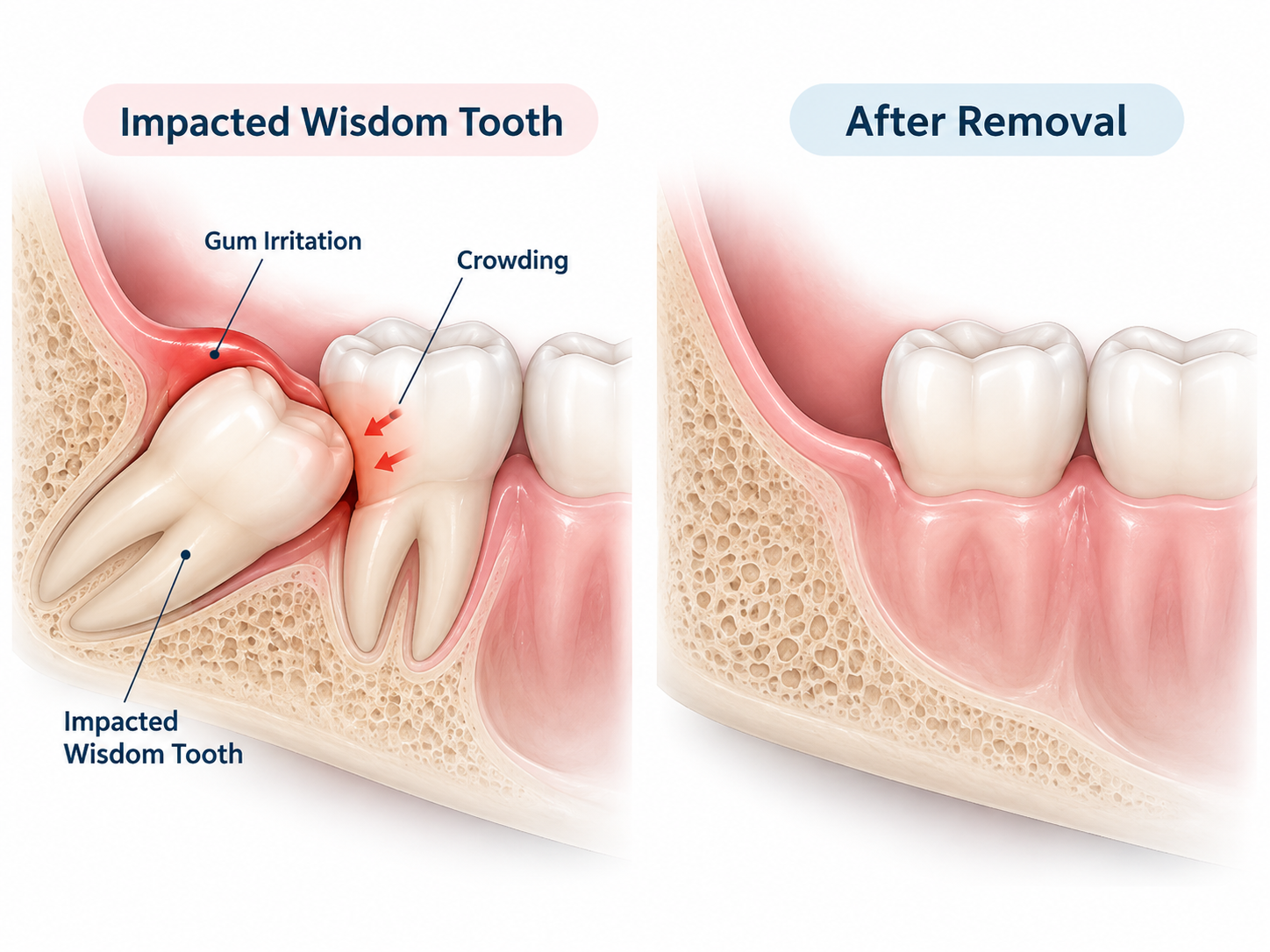
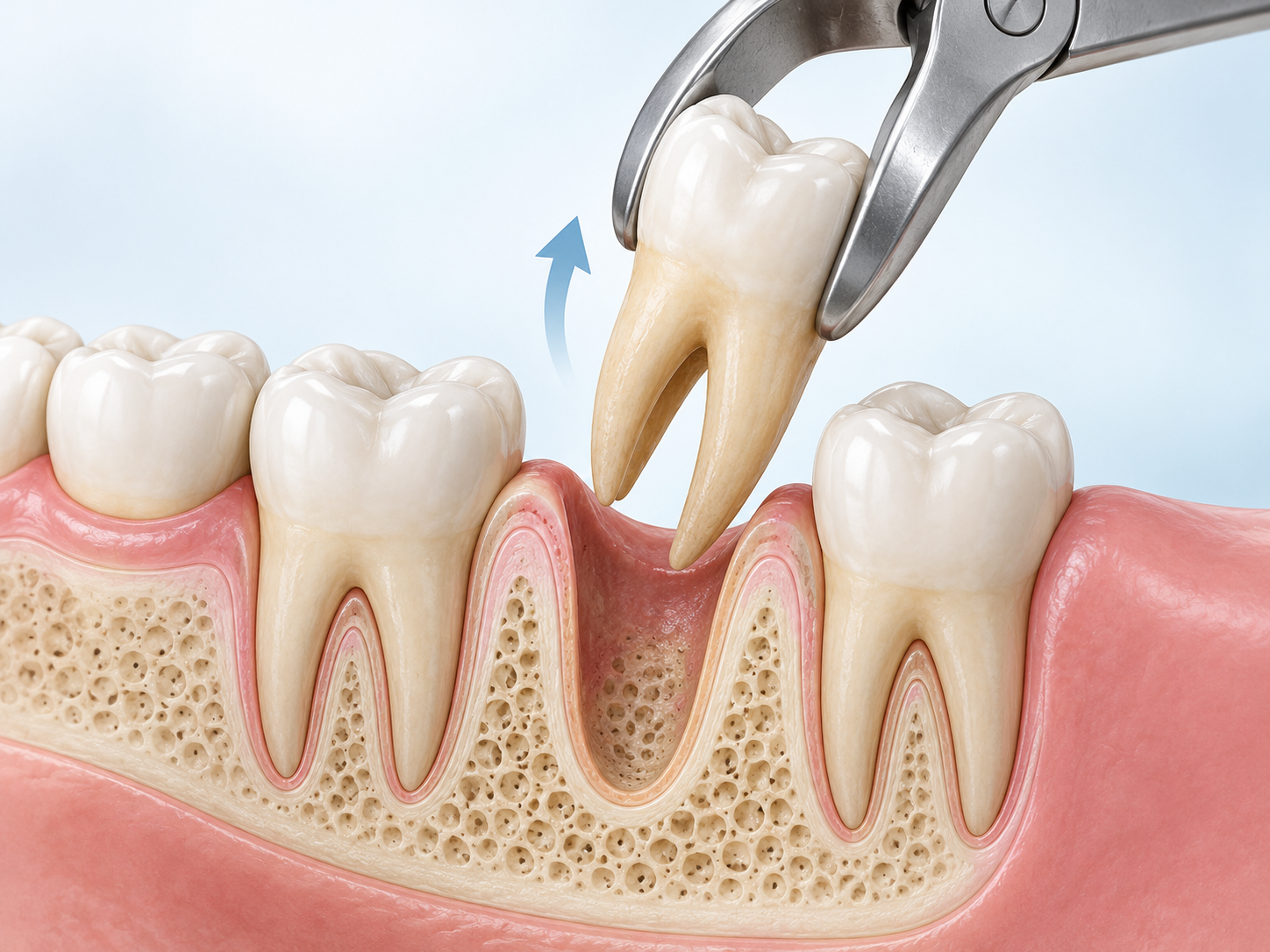
Wisdom teeth are located far back in the mouth and can be difficult to keep clean. When they do not have enough room to erupt normally, they may contribute to problems such as pain, infection or damage to neighboring teeth.
Your dentist may recommend removal when a wisdom tooth is impacted, poorly positioned or creating a risk of future problems.
Potential concerns can include:
Teeth may sometimes need to be removed when they are severely damaged, infected or cannot be predictably restored.
The complexity of an extraction depends on the tooth’s position, condition and surrounding anatomy. Some extractions can be performed routinely, while more complex or impacted teeth may require surgical treatment.
Your dentist will evaluate the tooth and imaging and discuss the appropriate treatment approach.
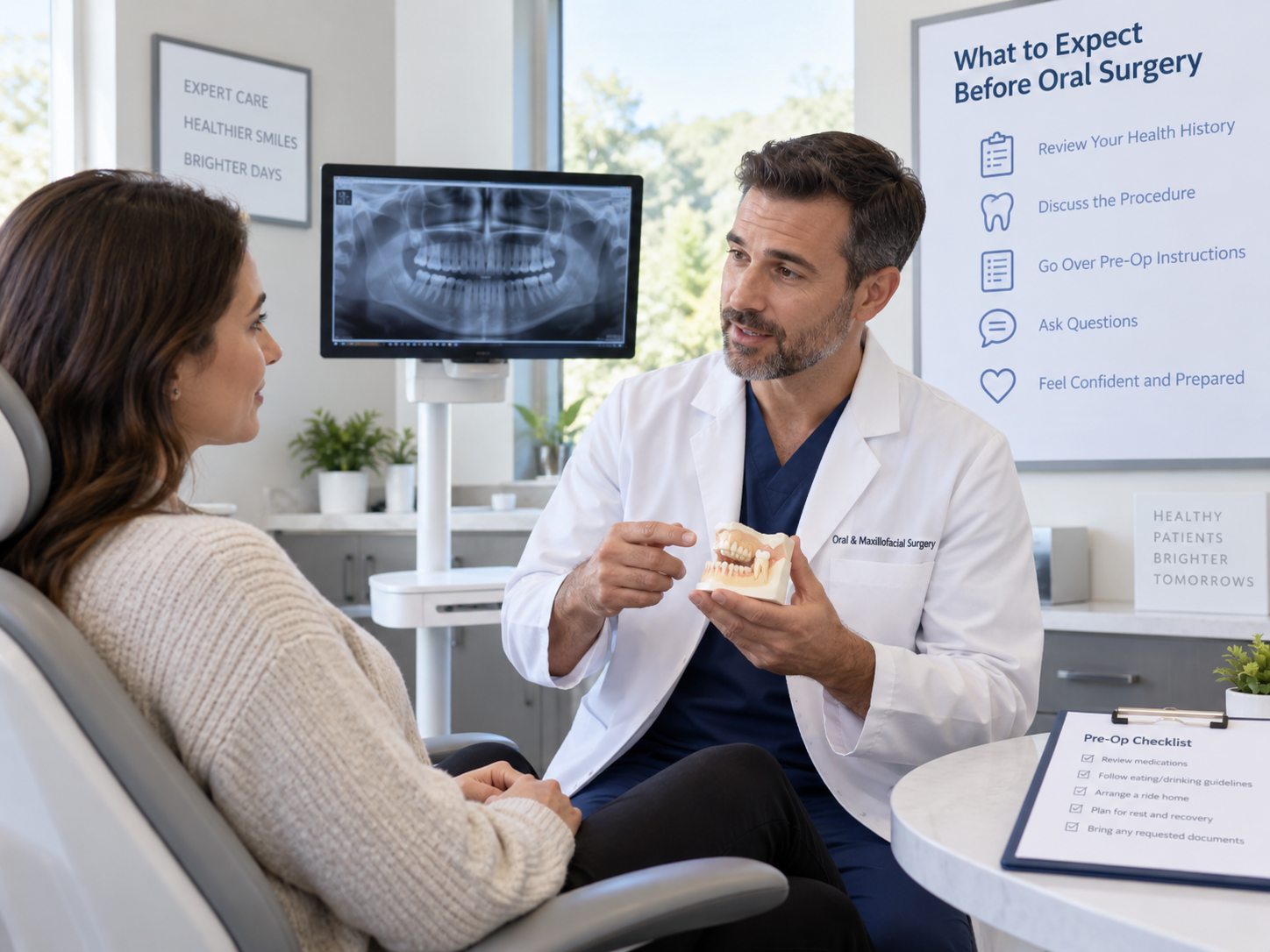
Before treatment, your dentist or oral surgeon will review the planned procedure and discuss what to expect.
You should provide a complete medical history and a current list of prescription and over-the-counter medications. Your provider will also discuss anesthesia or other comfort options that may be appropriate for your procedure.
Depending on the type of treatment, you may also be given instructions about eating, drinking, transportation and activity after the procedure.
Some symptoms after surgery deserve follow-up.
Contact the office if pain becomes significantly worse instead of gradually improving, if you experience persistent numbness, unusual swelling, bleeding that does not stop, or other symptoms that concern you.
One complication that can occur after an extraction is dry socket, which may cause increasing pain several days after treatment and sometimes an unpleasant taste or odor.

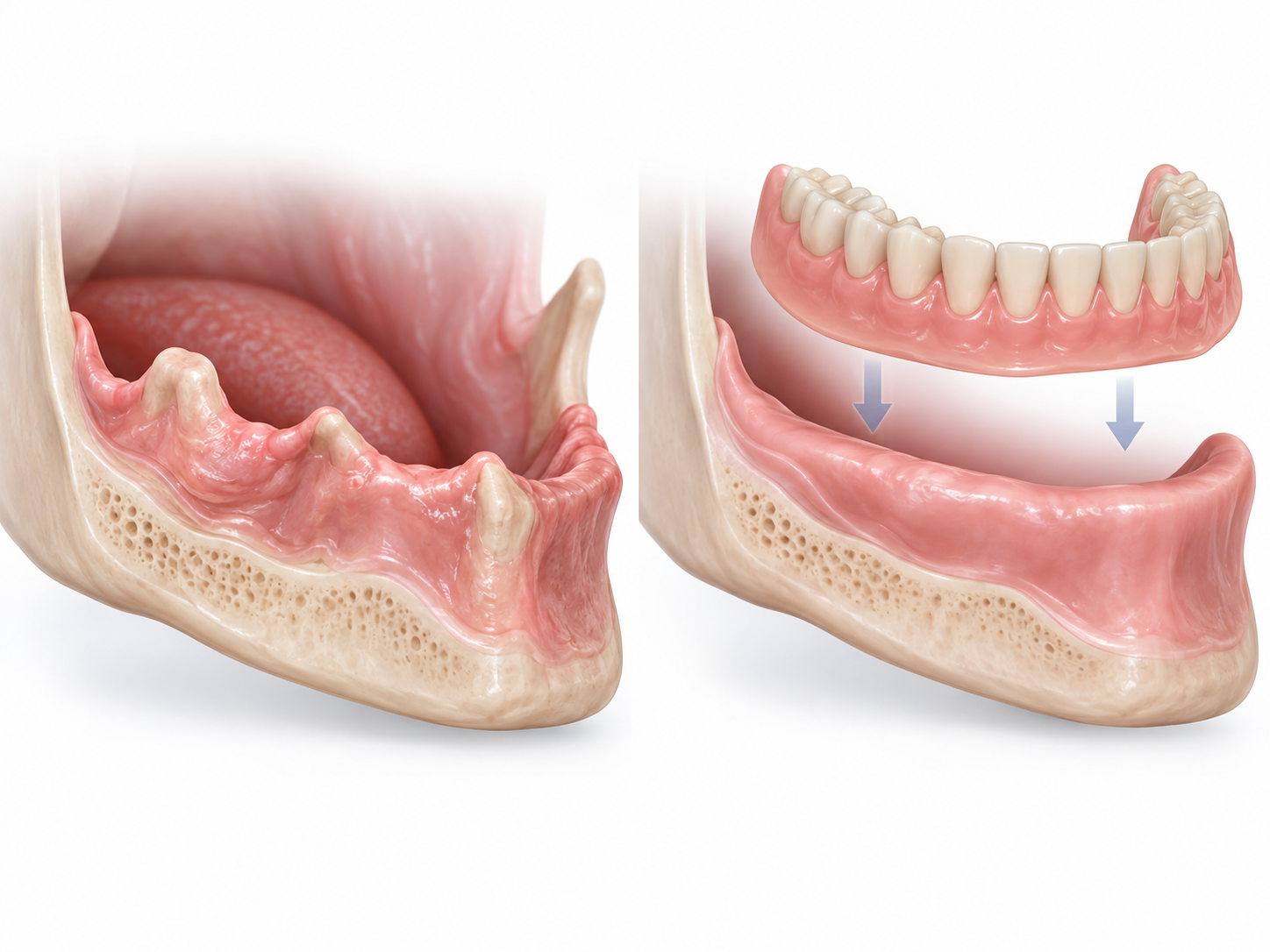
Before dentures or other removable prosthetic treatment, some patients may benefit from minor surgical reshaping of the jawbone or soft tissues.
The goal of pre-prosthetic surgery is to create a smoother, more stable foundation so a denture can fit more comfortably and function more effectively.
The specific procedure depends on the shape of the bone and gums and the type of prosthetic treatment being planned.
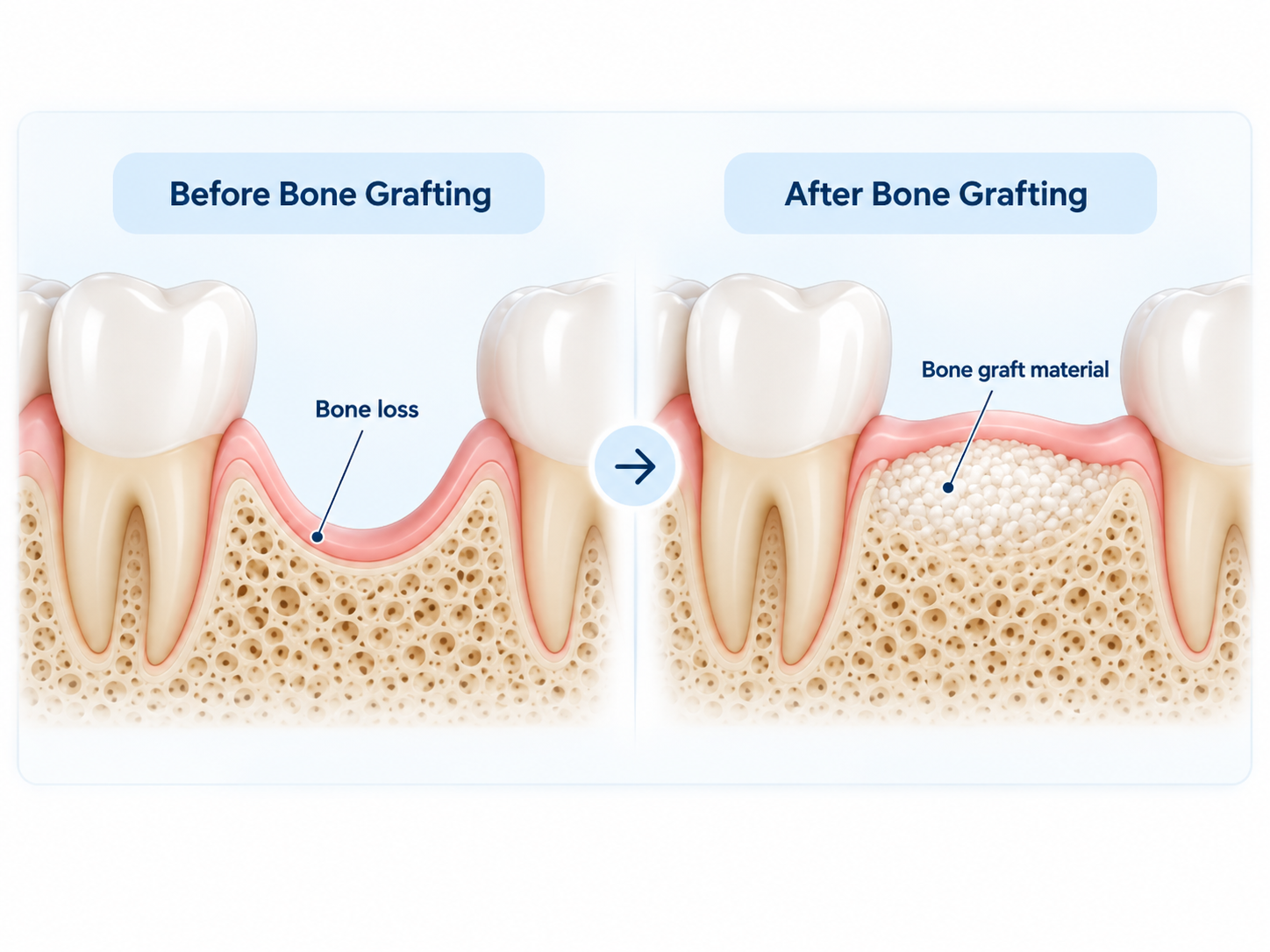
Bone grafting may be recommended when the jawbone does not have enough volume or strength to support future dental treatment.
The procedure places graft material in an area where bone has been lost or needs additional support. Over time, the area can heal and develop a stronger foundation for treatment such as dental implants.
Your dentist or specialist will determine whether bone grafting is appropriate based on your examination, imaging and treatment plan.
Coordinated surgical care, advanced imaging and convenient access across our dental network.
Evaluation and treatment for extractions, impacted teeth, bone grafting and other oral surgery needs.
General dentists and specialists work together to coordinate care when surgical treatment is needed.
All Total Care Dental offices are equipped with CT imaging to help evaluate anatomy, impacted teeth and surrounding structures for more precise surgical planning.
Oral surgery care is available through our South Los Angeles, Baldwin Park, Huntington Park and Lincoln Heights offices.
Convenient access to oral surgery consultations, imaging and treatment across our four Total Care Dental offices.
3060 Baldwin Park Blvd., Suite D100
Baldwin Park, CA 91706
Schedule a consultation to review your treatment options and determine the appropriate next step for your care.
