Dental implants offer a durable, natural-looking solution for replacing missing teeth and restoring function, confidence and comfort.

Personalized implant solutions for replacing one tooth, several teeth or a full arch of missing teeth.
Replace a missing tooth with an implant-supported restoration designed to look and function like a natural tooth.
Replace several missing teeth with a bridge supported by dental implants for added stability.
Improve denture stability and comfort by securing a removable denture to dental implants.
Restore an entire upper or lower arch with an implant-supported solution designed for improved function and confidence.
Rebuild areas of lost bone when additional support may be needed before dental implant placement.
Review your goals, oral health and available treatment options to determine whether dental implants may be appropriate for you.
Learn how dental implants work, who may be a candidate, and what to expect throughout treatment.
Missing teeth can affect chewing, speaking and the position of surrounding teeth. Over time, nearby teeth may shift, and areas that are harder to clean can become more vulnerable to additional dental problems.
Dental implants can provide a stable, natural-looking option for replacing missing teeth and restoring function.


Dental implants are small posts, typically made of titanium or another biocompatible material, that are placed into the jawbone to replace missing tooth roots.
After the implant heals and integrates with the surrounding bone, it can support a crown, bridge or denture. Dental implants may be used to replace a single tooth, several teeth or help stabilize a removable denture.
Many adults with one or more missing teeth may be candidates for dental implants. Important factors include overall health, gum health, available bone support and the ability to maintain good oral hygiene.
Patients who have experienced bone loss may still be candidates, but additional treatment such as bone grafting may sometimes be recommended before implant placement.
A dental implant consultation allows the dentist to evaluate your oral health, imaging and treatment goals and determine which options may be appropriate.

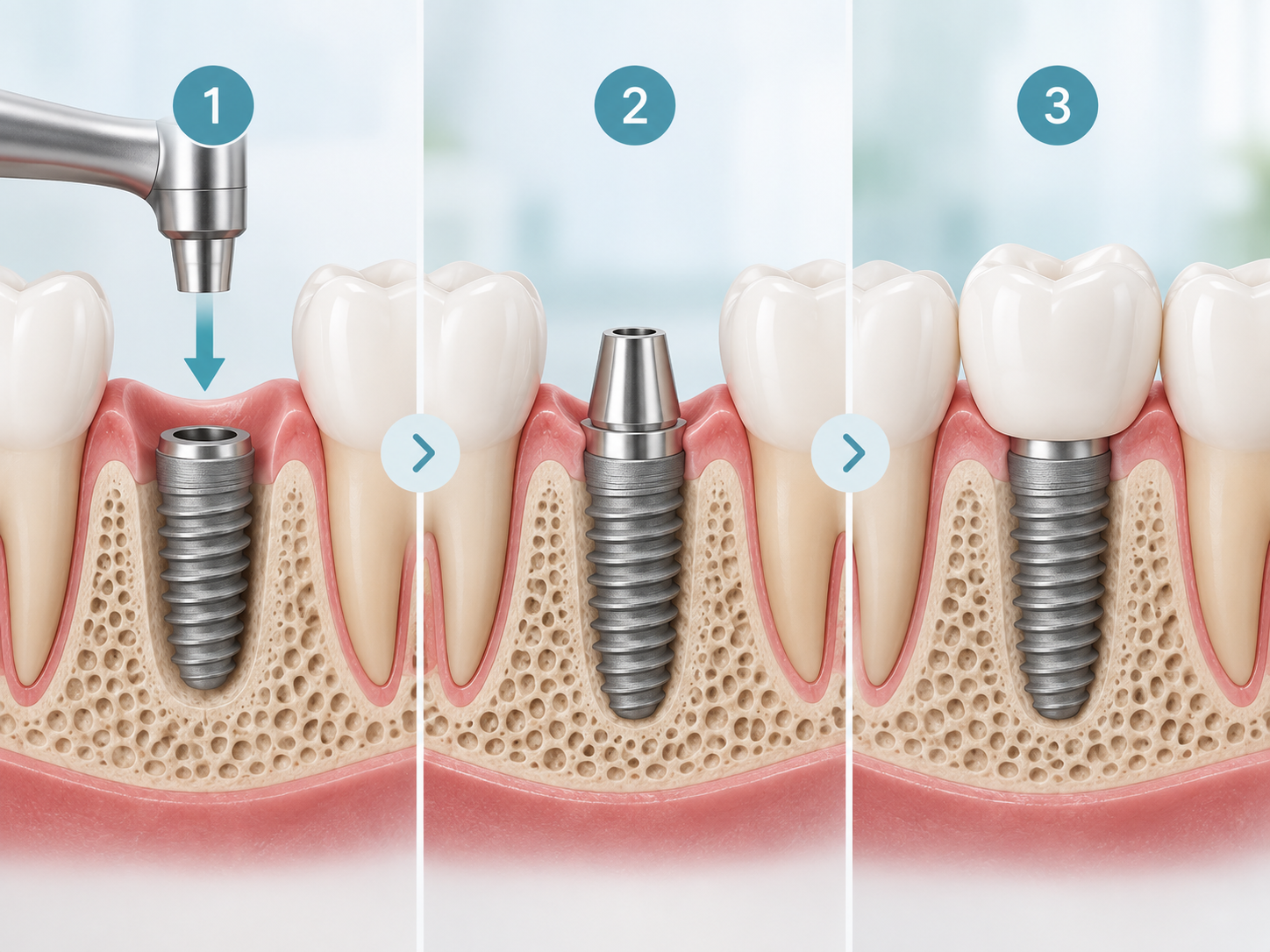
Dental implant treatment varies depending on the number of teeth being replaced, the condition of the jawbone and the type of restoration planned.
Treatment commonly includes placement of the implant into the jawbone, a healing period that allows the implant to integrate with the bone, attachment of an abutment when appropriate, and placement of the final crown, bridge or denture.
Some patients may require additional procedures, such as bone grafting, before implant placement. The total treatment time depends on the individual case.
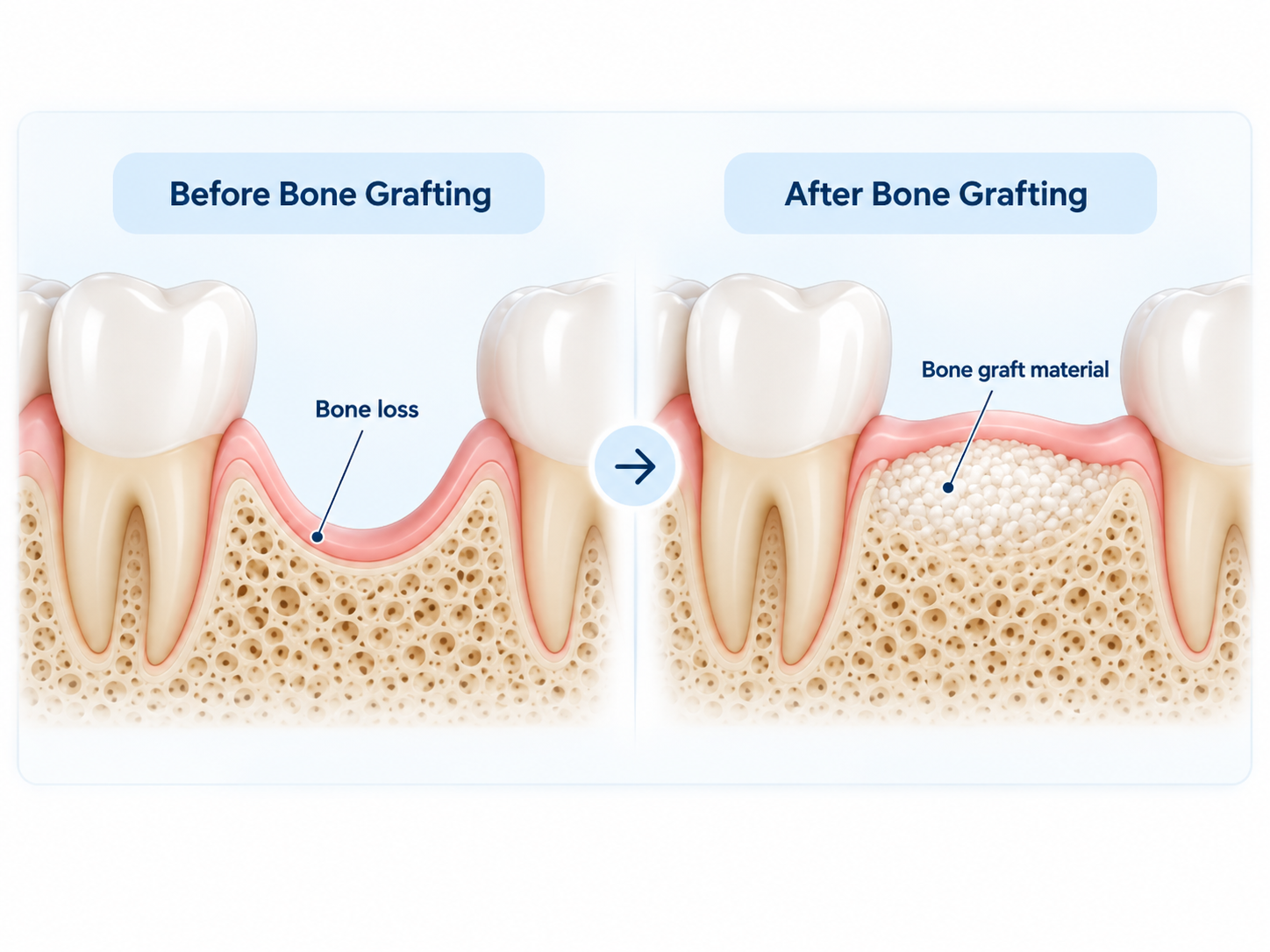
Dental implants need adequate bone for support. When bone has been lost after tooth loss, gum disease, injury or other causes, bone grafting may be recommended to rebuild the area.
A bone graft can help create a stronger foundation for future implant placement. Depending on the situation, grafting may be performed before implant placement or, in some cases, at the same time.
Your dentist or specialist will determine whether grafting is needed based on your examination and imaging.
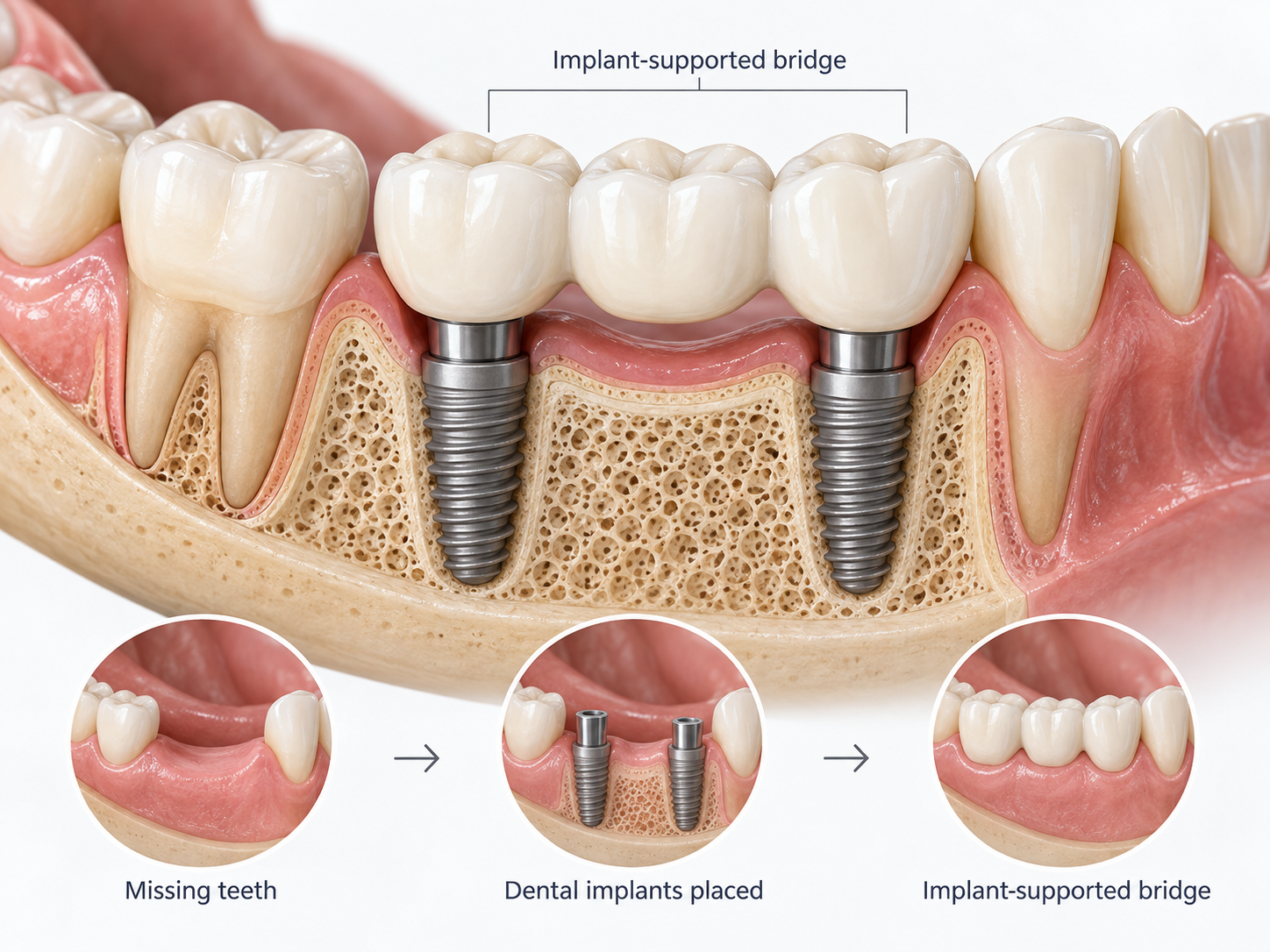
When several neighboring teeth are missing, an implant-supported bridge may be used to replace them without relying on natural teeth for support.
Dental implants are placed in strategic positions within the missing-tooth area and used to support a connected set of replacement teeth. This can provide greater stability than a traditional removable option while helping restore chewing function and appearance.
The number and position of implants needed will depend on the location of the missing teeth, available bone and the individual treatment plan.
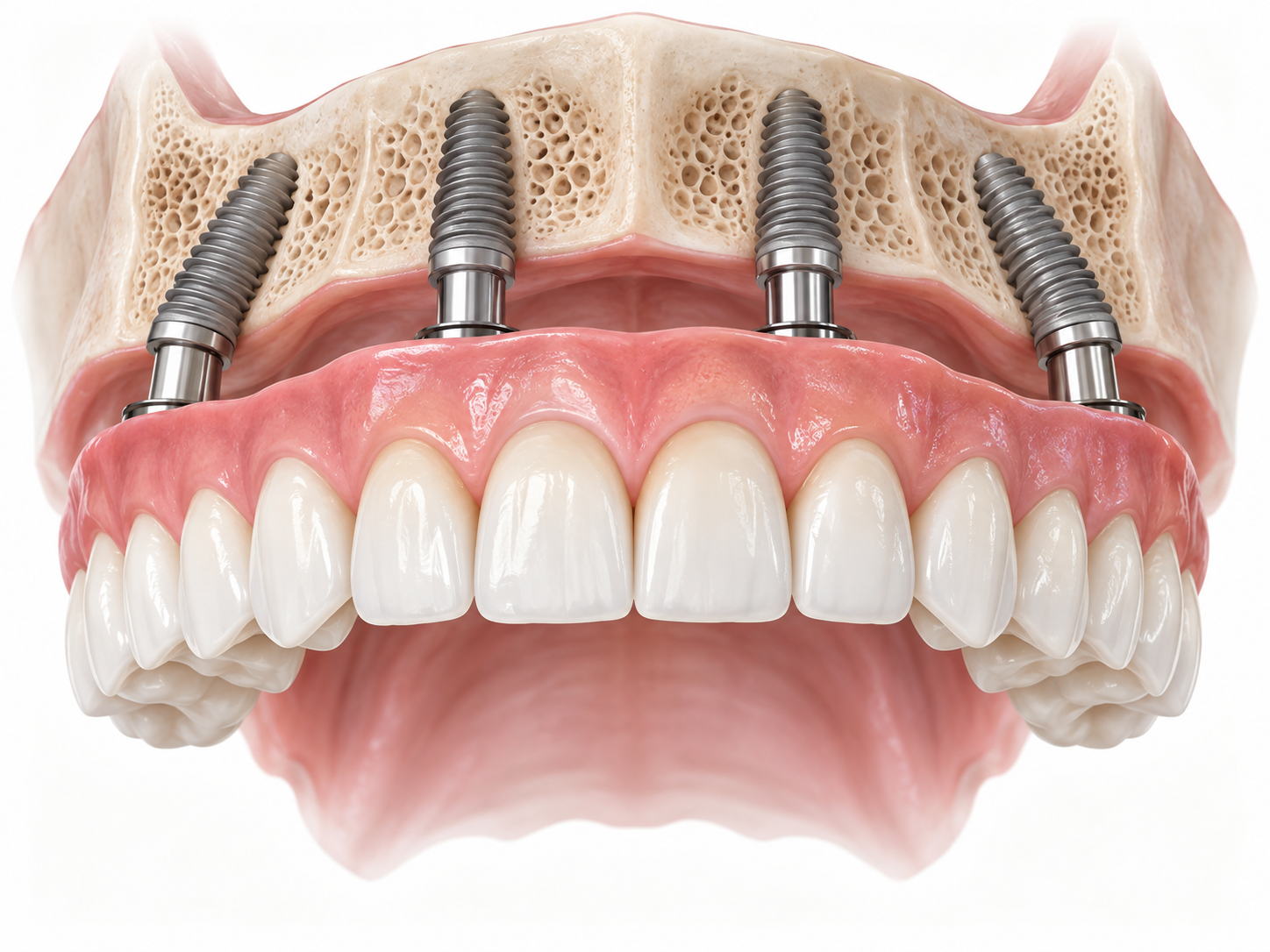
When most or all teeth in the upper or lower jaw are missing or cannot be predictably restored, dental implants may be used to support a full arch of replacement teeth.
Several implants are strategically positioned in the jaw to support the restoration. Depending on the treatment plan, the final teeth may be fixed in place or designed to be removable by the patient.
Full-arch implant treatment is customized based on bone availability, oral health, bite, esthetic goals and the type of restoration being considered.

Dental implants can be used to help stabilize dentures and improve their retention during everyday activities such as speaking and chewing.
Depending on the treatment plan, a denture may attach to implants while still being removable, or a more fixed implant-supported restoration may be considered.
The number and position of implants needed will depend on the condition of the jaw, the type of restoration and the patient’s individual treatment needs.
Dental implants still require regular care. Brushing, flossing or using other recommended cleaning aids helps keep the gums and tissues around the implant healthy.
Regular dental visits are also important so the implant, surrounding gums and restoration can be monitored over time.
With appropriate home care and professional maintenance, dental implants are designed to function as a long-term tooth-replacement option.

Coordinated implant care, modern treatment planning and convenient access across our dental network.
Evaluation, implant treatment planning and restorative care coordinated around your individual needs.
General dentists and specialists work together to help plan and coordinate implant treatment when additional care is needed.
All Total Care Dental offices are equipped with CT imaging to help evaluate bone structure, anatomy and implant position for more precise treatment planning.
Dental implant care available through our South Los Angeles, Baldwin Park, Huntington Park and Lincoln Heights offices.
Convenient access to dental implant consultations, imaging and coordinated treatment across our four Total Care Dental offices. All our offices are equipped with 3D CT imaging to support implant evaluation and treatment planning.
3060 Baldwin Park Blvd., Suite D100
Baldwin Park, CA 91706
Schedule a dental implant consultation and learn which treatment options may be appropriate for your needs.
