Dental sealants are thin protective coatings placed on the chewing surfaces of back teeth to help keep food and bacteria out of deep grooves where cavities commonly develop.

Dental sealants are thin protective coatings applied to the chewing surfaces of molars and premolars. These back teeth often have deep grooves and pits where food and bacteria can collect, making them more vulnerable to cavities.
The sealant material flows into these grooves and hardens to create a smoother protective surface that is easier to keep clean.
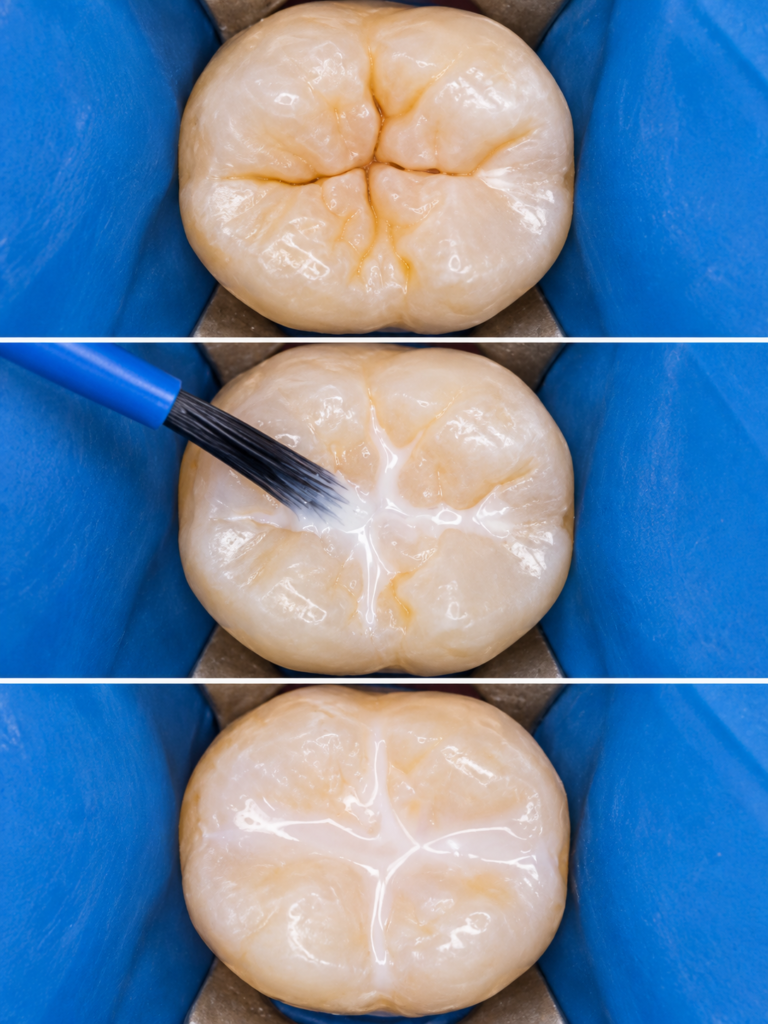
Sealant placement is a quick, comfortable procedure that usually requires no drilling or numbing.
The chewing surface of the tooth is cleaned and prepared so the sealant can bond properly.
The sealant material is carefully placed into the grooves and pits of the tooth.
The material is hardened and the dentist checks the tooth to make sure the sealant fits comfortably.
Sealants are often recommended for teeth with deep grooves or other areas that are more difficult to keep clean.
Sealants are commonly placed on newly erupted permanent molars to help protect them during cavity-prone years.
Teeth with pronounced pits and grooves may benefit from an added protective barrier.
Sealants may be recommended when a patient has a history or increased risk of tooth decay.
Dental sealants provide an extra layer of protection for the chewing surfaces of teeth that are more difficult to keep clean.
Sealants cover deep grooves where toothbrush bristles may not reach effectively.
The protective coating helps block food and bacteria from collecting in treated grooves.
Sealant placement is typically fast, noninvasive, and does not usually require anesthesia.
Sealants work alongside brushing, flossing, fluoride, and regular dental visits to help protect teeth.
Sealants Can Wear Over Time
Your dentist will check existing sealants during routine visits and may recommend repair or replacement if they become worn.
Not Every Tooth Needs a Sealant
Sealants are recommended based on the shape of the tooth, cavity risk, and your dentist’s clinical evaluation.
Sealants Protect Only the Treated Surface
Decay can still develop in other areas of the tooth, so daily oral hygiene remains important.
Regular Exams Still Matter
Routine dental visits allow your dentist to monitor both the sealants and the overall health of your teeth.
Sealants work together with other preventive treatments to help protect your teeth and maintain long-term oral health.
Regular exams and diagnostic imaging help your dentist monitor your oral health and identify problems early.
Professional fluoride treatment can help strengthen tooth enamel and provide additional protection against tooth decay.
An oral cancer screening helps your dentist check the mouth, tongue, lips, and surrounding tissues for areas that may need further evaluation.
Schedule an appointment with our team to find out whether dental sealants may be appropriate for you or your child.
