A tooth extraction may be recommended when a tooth is too damaged, infected, or otherwise unable to be predictably restored. Our dentists evaluate each tooth carefully and will recommend removal only when it is the appropriate treatment option.

A tooth extraction is the removal of a tooth from its socket. Extractions may be necessary when a tooth has been severely damaged by decay, trauma, or disease and cannot be predictably repaired with a filling, crown, root canal treatment, or another restoration.
Teeth may also need to be removed because of crowding or other treatment needs. Your dentist will examine the tooth and surrounding tissues and determine whether extraction is necessary and whether the procedure can be completed as a simple extraction or requires surgical care.
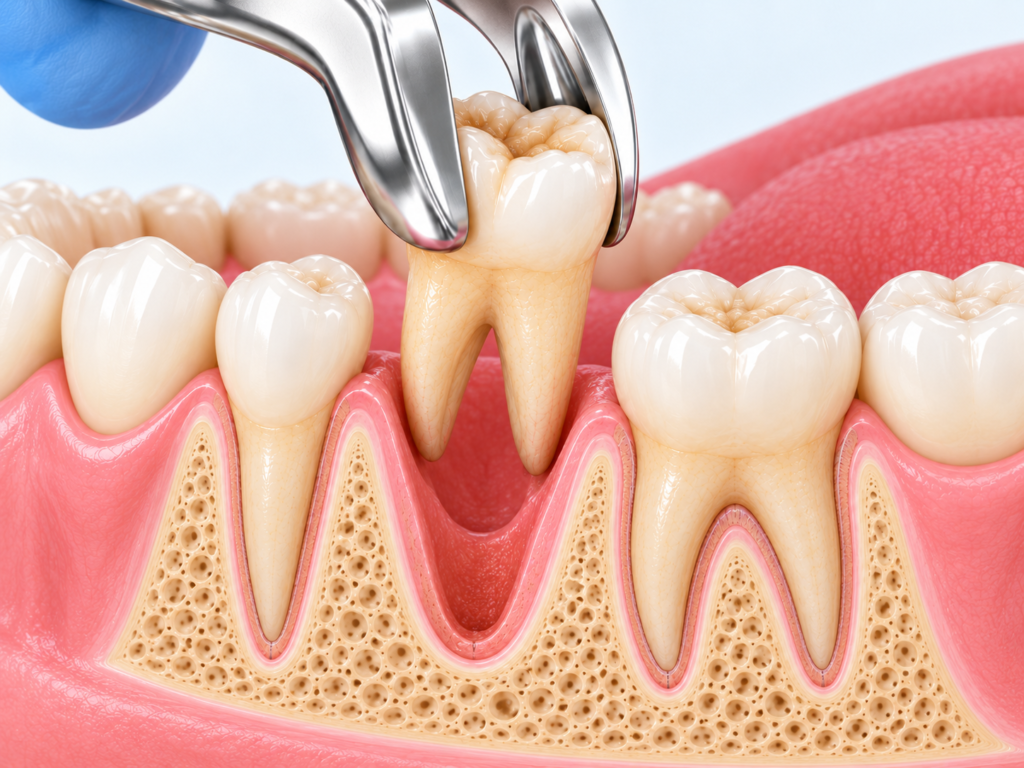
The type of extraction depends on the condition, position, and complexity of the tooth being removed.
Simple extractions are typically performed when the tooth is visible and can be removed without a surgical approach. The area is numbed with local anesthetic, and the tooth is carefully loosened and removed while protecting the surrounding teeth and bone.
Surgical extractions are used for teeth that are more difficult to access or remove. The tooth may need to be sectioned into smaller pieces, and treatment may be performed by an oral surgeon depending on the complexity of the case.
Your dentist will evaluate the tooth, explain the recommended procedure, and review what to expect before and after treatment.
Your dentist examines the tooth and may use X-rays to evaluate the roots, surrounding bone, and nearby structures before recommending extraction.
The treatment area is numbed with local anesthetic. The tooth is then carefully loosened and removed using the approach appropriate for the individual case.
After the tooth is removed, your dentist provides instructions for protecting the extraction site and supporting normal healing.
Extraction is generally considered when preserving the tooth is no longer predictable or when removal is necessary for another treatment plan.
A tooth with extensive decay, fracture, or structural damage may not have enough healthy tooth remaining to be restored.
In some situations, infection or periodontal damage may make removal of the tooth the most appropriate treatment.
A tooth may sometimes need to be removed to create space or support another dental or orthodontic treatment plan.
Your dentist will review the reason for the extraction, the complexity of the procedure, and any options for replacing the tooth when appropriate.
Saving the Tooth Is Considered First
When appropriate, your dentist will consider whether the tooth can be restored before recommending removal.
Some Extractions Require Specialist Care
More complex teeth may require surgical extraction or referral to an oral surgeon.
Healing Instructions Matter
Following your dentist’s aftercare instructions is important for protecting the extraction site during healing.
Tooth Replacement May Be Recommended
When a permanent tooth is removed, your dentist may discuss options such as a dental implant, bridge, or removable restoration depending on your needs.
Depending on the condition of the tooth, your dentist may recommend extraction or another treatment designed to preserve or replace the tooth.
Crowns can help restore damaged teeth, while bridges may be used to replace a missing tooth after extraction.
Root canal treatment may be recommended when decay or infection reaches the inner portion of the tooth.
Complex extractions and other surgical dental procedures may be managed by an oral surgeon when specialist care is appropriate.
Schedule an appointment with our team to have the tooth evaluated and learn whether it can be restored or whether extraction may be necessary.
