Dental crowns and bridges are custom restorations used to strengthen damaged teeth and replace missing teeth. Depending on your needs, your dentist may recommend a crown to protect a weakened tooth or a bridge to restore a gap in your smile.

A dental crown is a custom restoration that covers the visible portion of a tooth to restore its shape, strength, and function. Crowns are often recommended when a tooth has been significantly weakened or damaged and a filling alone may not provide enough support.
Crowns are designed to fit over the prepared tooth and can be made from several types of materials, including ceramic, porcelain, metal alloys, composite resin, or combinations of these materials.
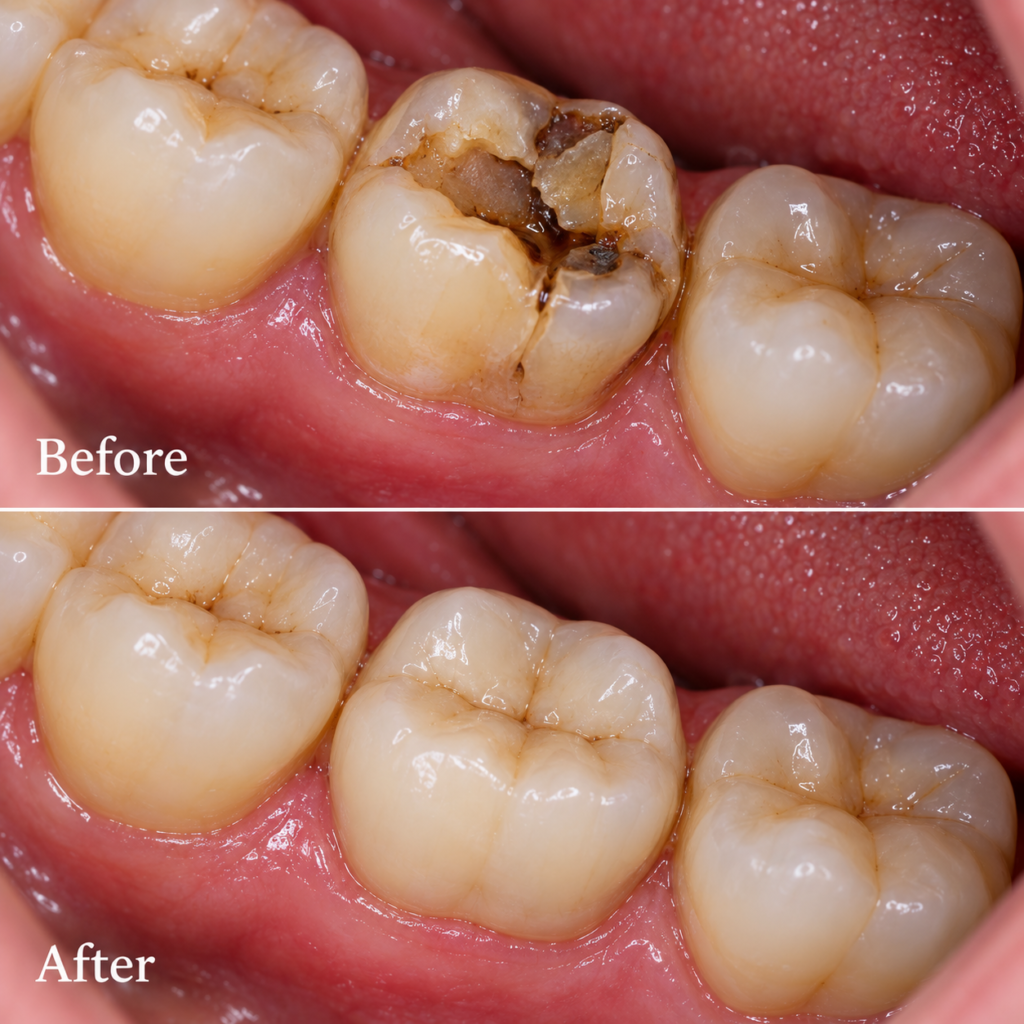
Dental crown treatment usually involves preparing the tooth, creating a custom restoration, and carefully fitting the final crown.
Your dentist removes the damaged or weakened portion of the tooth and shapes it so the crown can fit securely.
An impression or digital scan is taken so the final crown can be custom-made. A temporary crown may be placed while the final restoration is being created.
The completed crown is fitted, adjusted for appearance and bite, and then securely cemented into place.
Dental crowns can be made from several materials, including ceramic, porcelain, metal alloys, composite resin, or combinations of these materials. The most appropriate material depends on the location of the tooth, the forces placed on it, the appearance you want, and your dentist’s clinical recommendation.
For visible teeth, tooth-colored materials can often be selected to blend naturally with the surrounding smile.

A dental bridge is a fixed restoration used to replace one or more missing teeth. It fills the space created by missing teeth and helps restore the appearance and function of the smile.
A traditional bridge usually includes a replacement tooth, called a pontic, supported by crowns placed over the teeth on either side of the gap.

When a tooth is missing, nearby teeth may gradually shift or tilt into the empty space. Teeth in the opposite jaw may also move toward the gap. These changes can affect your bite, make certain areas harder to clean, and place additional stress on the surrounding teeth.
Replacing a missing tooth can help maintain the alignment, function, and overall balance of your smile.
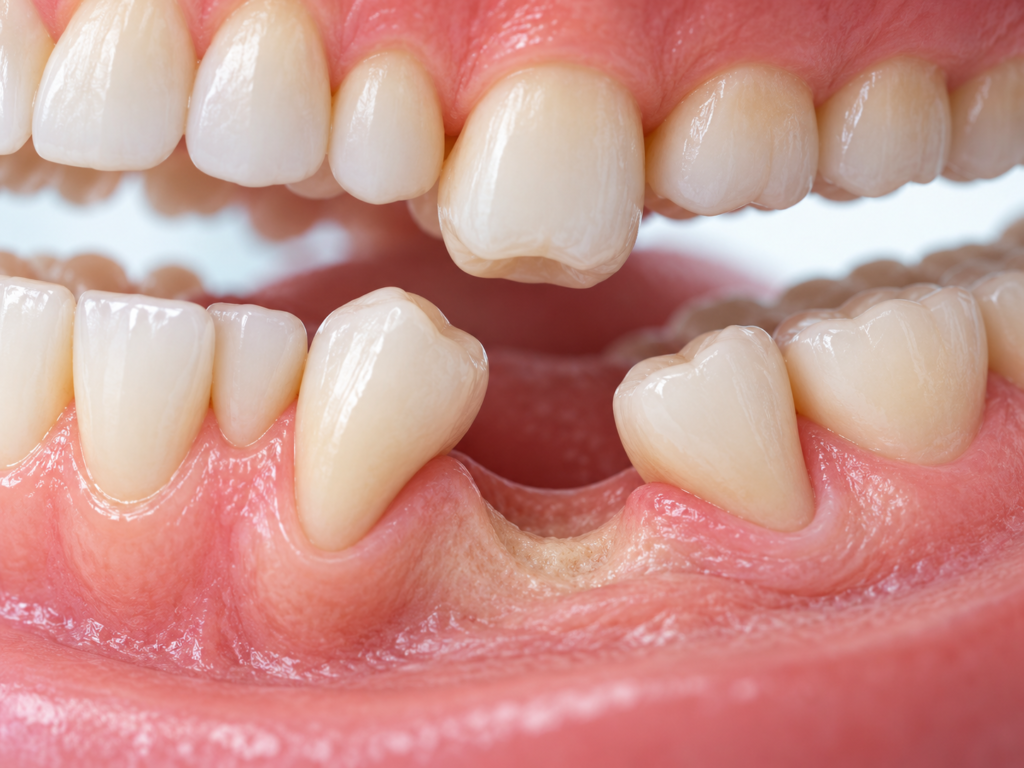
A dental bridge is carefully designed to replace missing teeth and fit securely with the surrounding teeth and bite.
The teeth on either side of the missing-tooth space are prepared so they can support the bridge.
Impressions or digital records are taken so the bridge can be custom-made. A temporary restoration may be placed while the final bridge is being created.
The final bridge is fitted, adjusted for comfort and bite, and then permanently cemented into place.
Crowns and bridges can restore damaged or missing teeth while helping improve strength, function, and the appearance of the smile.
Bridges can fill gaps created by missing teeth and restore continuity to the smile.
Crowns can reinforce teeth that have been weakened by decay, fractures, or large restorations.
Restoring damaged or missing teeth can help improve everyday biting and chewing.
Tooth-colored materials can be selected to blend with the surrounding teeth for a more natural appearance.
Crowns and bridges are durable restorative treatments, but they require healthy supporting teeth and good ongoing oral hygiene.
Some Natural Tooth Structure Must Be Removed
Crowns and traditional bridges require the supporting teeth to be reshaped so the restoration can fit securely.
Good Oral Hygiene Is Important
Brushing, flossing, and cleaning around and under a bridge are important for protecting the supporting teeth and gums.
Restorations Can Wear Over Time
Crowns and bridges can chip, loosen, or eventually require repair or replacement.
Other Replacement Options May Be Available
For missing teeth, dental implants or removable restorations may also be considered depending on your oral health and treatment goals.
Depending on the condition of your teeth, your dentist may recommend crowns, bridges, or another restorative treatment.
Fillings can repair small to moderate areas of decay or damage while preserving healthy tooth structure.
Root canal treatment may be recommended when decay or infection reaches the inner portion of the tooth.
Dental implants can replace missing teeth and may provide an alternative to a traditional bridge in selected cases.
Schedule a consultation with our team to find out whether a dental crown, bridge, or another restorative treatment may be right for you.
