Dental fillings are used to repair teeth affected by decay or minor damage. By removing the damaged portion of the tooth and replacing it with a durable restorative material, a filling can help restore strength, function, and comfort.

A dental filling is a restoration used to repair a tooth that has been damaged by decay or a small fracture. The affected portion of the tooth is removed, the area is cleaned, and the remaining space is filled with a restorative material.
Tooth-colored composite fillings are commonly used because they can be matched to the surrounding tooth structure for a more natural appearance. Your dentist will evaluate the tooth and recommend the most appropriate treatment based on the size and location of the damage.
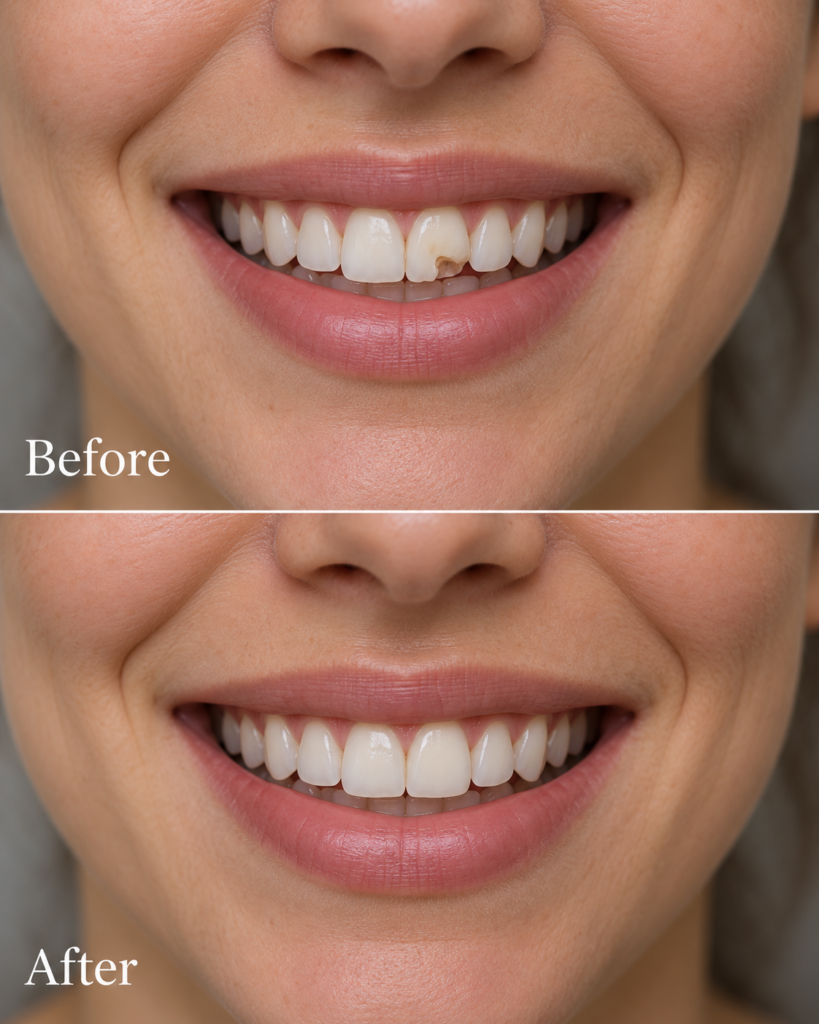
Dental fillings are typically completed in a straightforward visit designed to remove decay and restore the damaged tooth.
Your dentist examines the tooth and may use X-rays to evaluate the extent of decay or damage and determine whether a filling is appropriate.
The damaged or decayed portion of the tooth is carefully removed and the area is cleaned and prepared for the filling material.
The filling material is placed, shaped to restore the tooth, and adjusted for a comfortable bite before being polished.
A filling may be recommended when a tooth has limited decay or damage that can be restored without a larger restoration such as a crown.
Fillings are commonly used to repair cavities and restore areas where decay has damaged the tooth.
Minor damage may sometimes be restored with tooth-colored filling material.
A filling may help rebuild a small area of tooth structure affected by wear or damage.
Dental fillings help repair damaged tooth structure and restore everyday function while preserving as much of the natural tooth as possible.
Removing decay and restoring the tooth helps prevent the damaged area from becoming larger.
A filling helps rebuild the damaged portion of the tooth and restore support for normal biting and chewing.
Tooth-colored filling materials can be matched to the surrounding tooth for a more discreet restoration.
Fillings allow your dentist to repair a limited area of damage while keeping healthy tooth structure whenever possible.
Dental fillings are effective for many small to moderate areas of decay or damage, but larger problems may require a different type of restoration.
Larger Damage May Require a Crown
If too much tooth structure has been lost, a crown may provide better protection than a filling.
Temporary Sensitivity Can Occur
Some teeth may feel temporarily sensitive to temperature or pressure after a filling is placed.
Fillings Can Wear Over Time
Like other dental restorations, fillings can wear, chip, or eventually need replacement.
Good Oral Hygiene Still Matters
Brushing, flossing, and regular dental visits remain important because decay can still develop around an existing filling.
Depending on the extent of damage, your dentist may recommend a filling or another restorative treatment to help protect and restore the tooth.
Dental crowns can protect and restore teeth with more extensive damage, while bridges can replace one or more missing teeth.
Root canal treatment may be recommended when decay or infection reaches the inner portion of the tooth.
When a tooth cannot be predictably restored, removal may sometimes be recommended to protect oral health.
Schedule an appointment with our team to have the tooth evaluated and find out whether a dental filling may be the right treatment.
