Braces can make it easier for food and plaque to collect around brackets and wires. Good brushing, flossing, and regular dental care can help keep your teeth and gums healthy throughout orthodontic treatment.
Keeping Teeth and Gums Healthy During Orthodontic Treatment
Brackets and wires create additional areas where food and plaque can collect. Without careful daily cleaning, this buildup can increase the risk of cavities, gum inflammation, and permanent white marks on the teeth.
Good oral hygiene helps protect your smile throughout treatment and can make it easier to maintain healthy teeth and gums when your braces are removed.
BRUSHING WITH BRACES
How to Brush Around Brackets and Wires
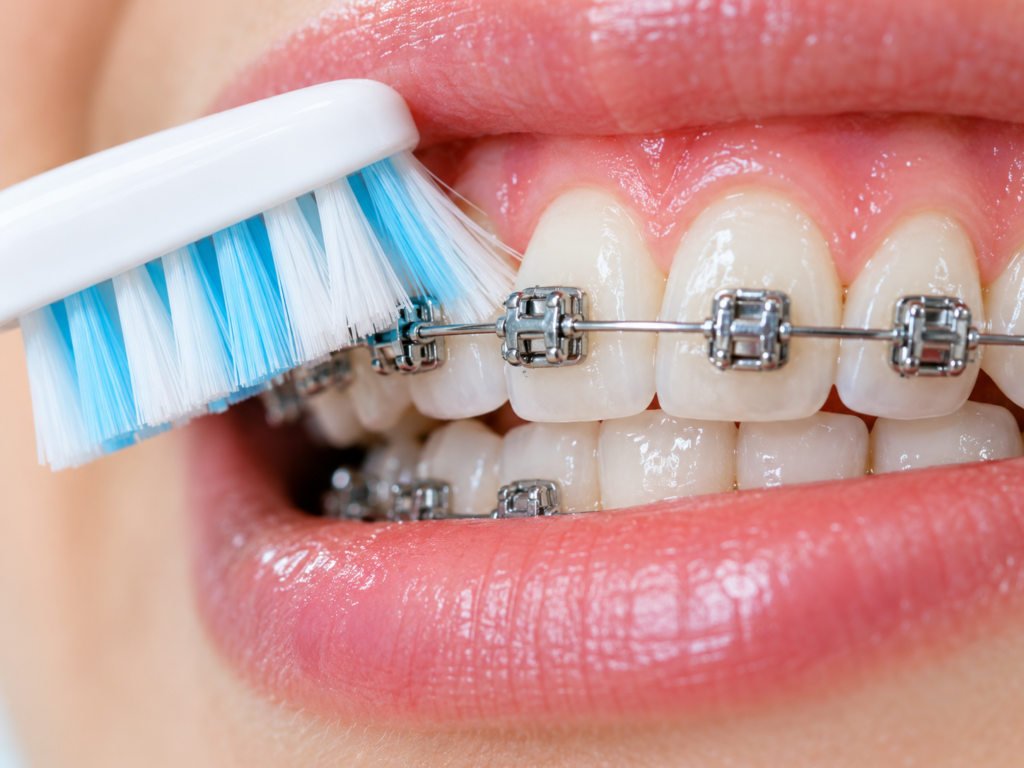
Brushing carefully around your braces helps remove plaque and food from areas that are easier to miss during orthodontic treatment.
Brush Above and Below the Brackets
Angle the toothbrush toward the gumline and then toward the brackets so the bristles can clean along the edges of the braces.
Clean Around the Brackets and Wire
Brush the front, top, and bottom of each bracket and gently clean around the archwire and between the brackets.
Brush All Tooth Surfaces
Do not forget the chewing surfaces and the inside surfaces of the teeth, and brush gently along the gumline.
FLOSSING WITH BRACES
How to Floss Around Brackets and Wires
Flossing helps clean between the teeth and along the gumline where a toothbrush may not reach effectively.
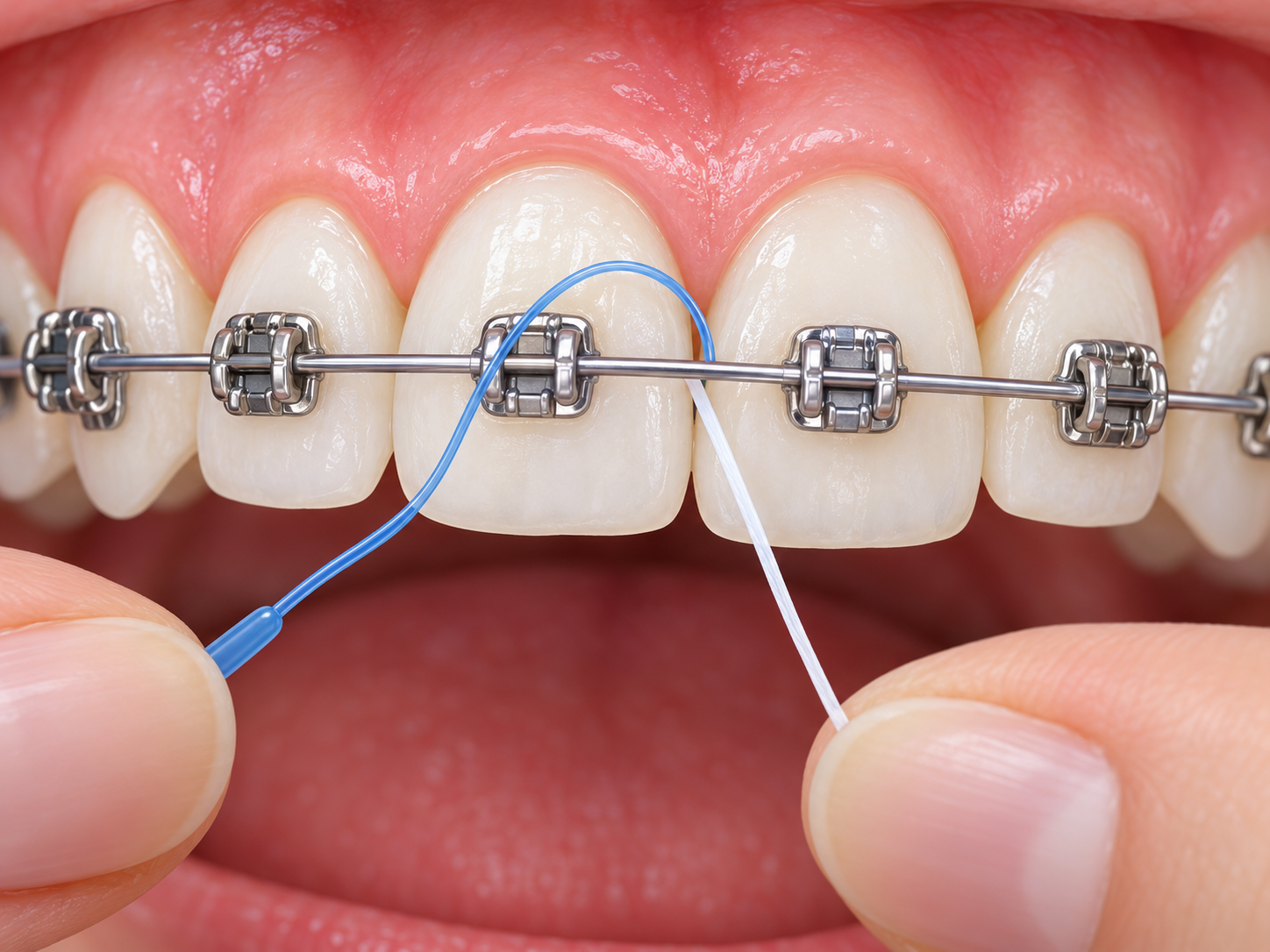
Get the Floss Under the Wire
Use a floss threader, orthodontic flosser, or another recommended tool to guide the floss underneath the archwire.
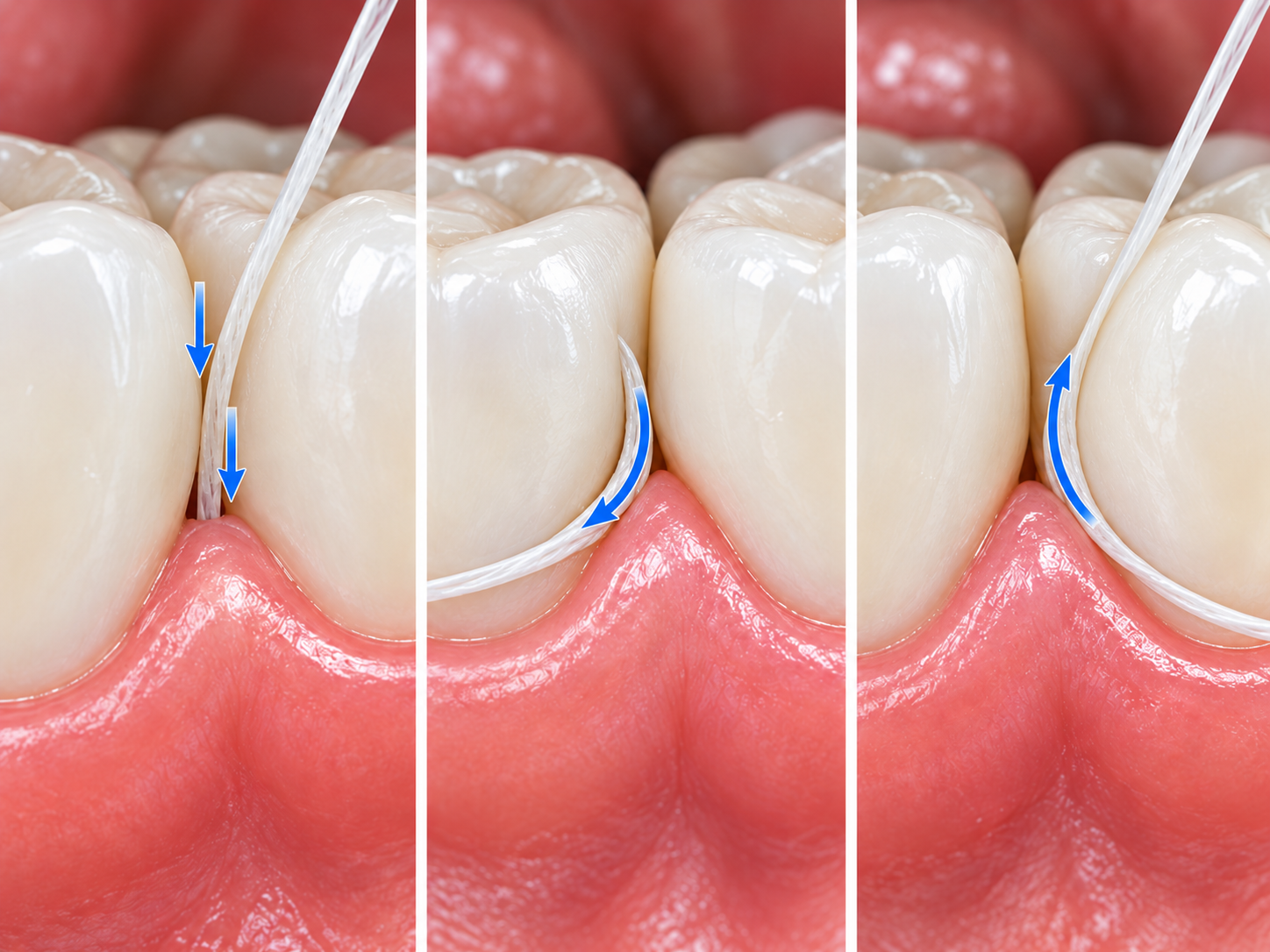
Clean Between the Teeth
Gently move the floss between the teeth and curve it around each tooth to clean along the sides and just below the gumline.
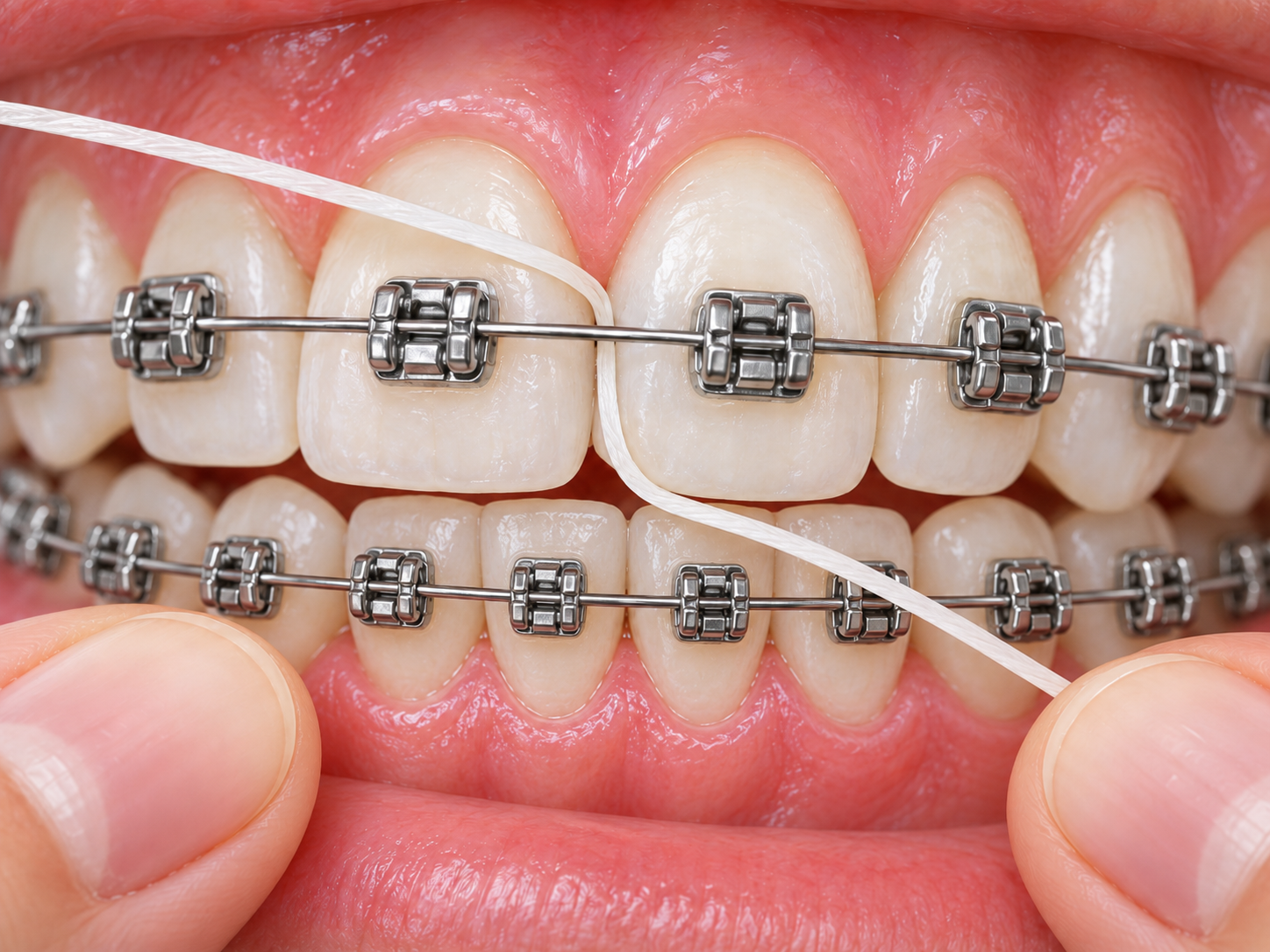
Repeat Throughout the Mouth
Floss between each pair of teeth, taking care not to pull or place unnecessary pressure on the brackets and wires.
HELPFUL TOOLS
Tools That Can Make Cleaning Around Braces Easier
A few simple tools can make it easier to clean around brackets, wires, and between the teeth during orthodontic treatment.
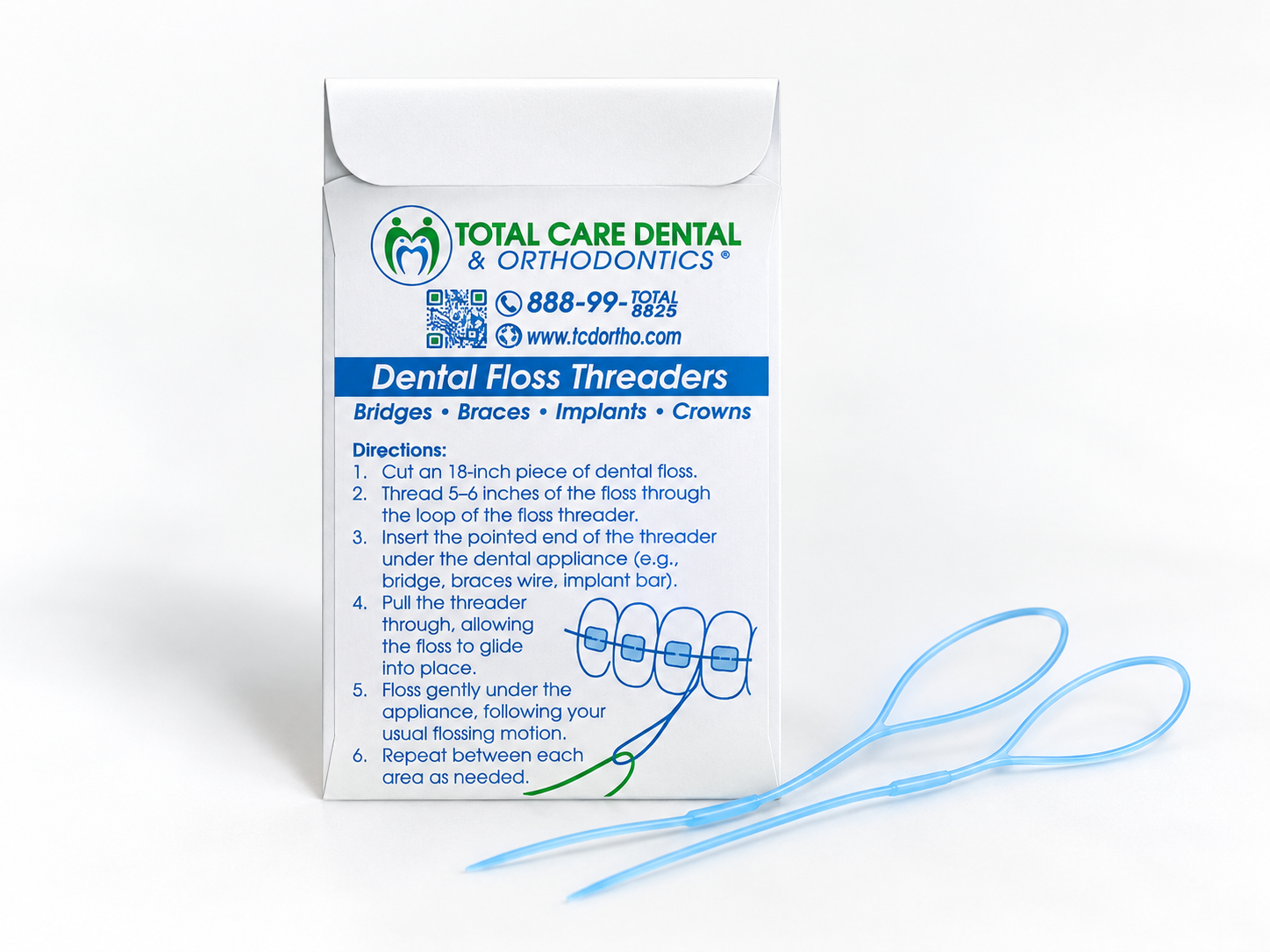
Floss Threader
A floss threader helps guide dental floss underneath the archwire so you can clean between the teeth.
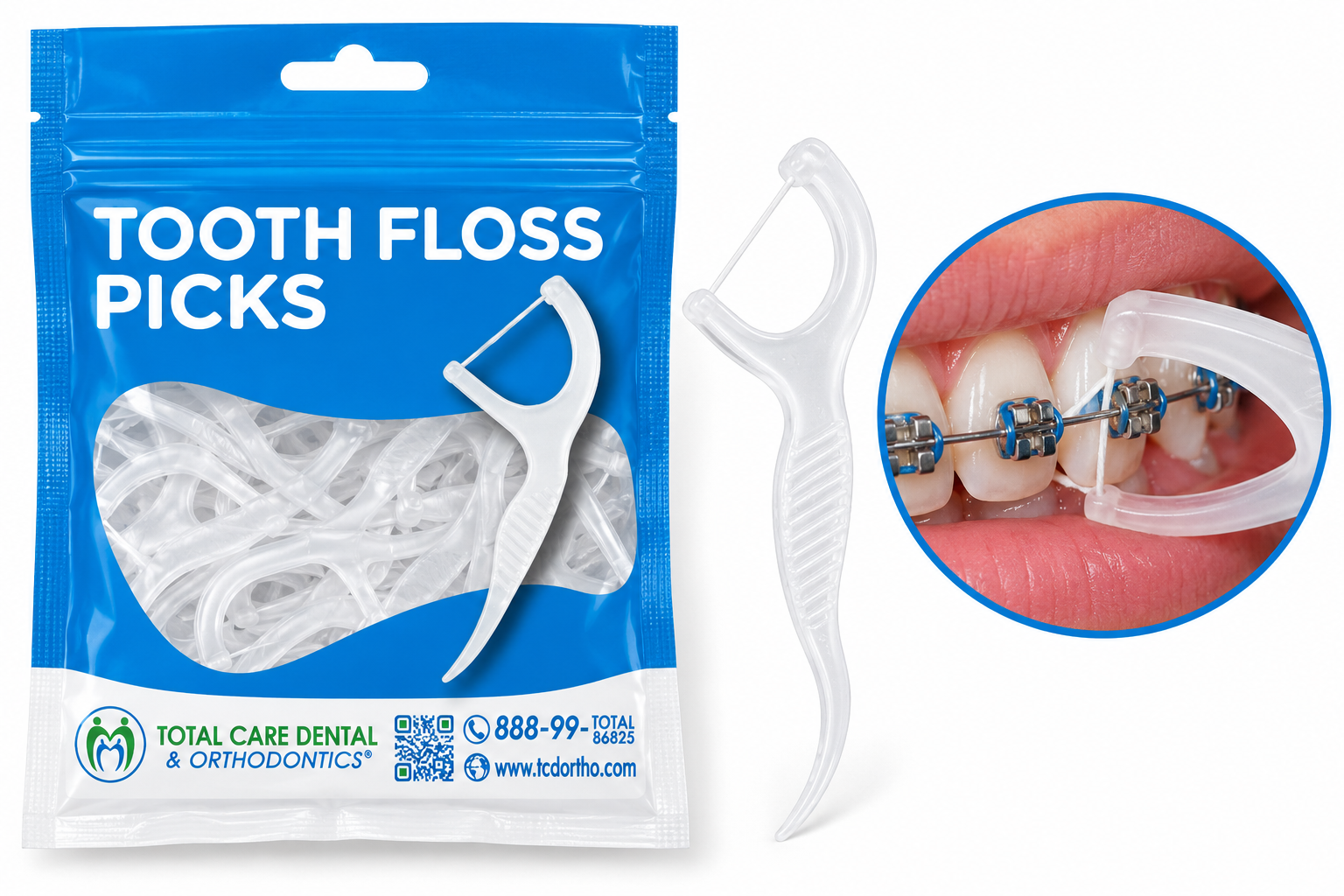
Orthodontic Flosser
An orthodontic flosser is designed to fit around braces and can make daily flossing faster and easier.
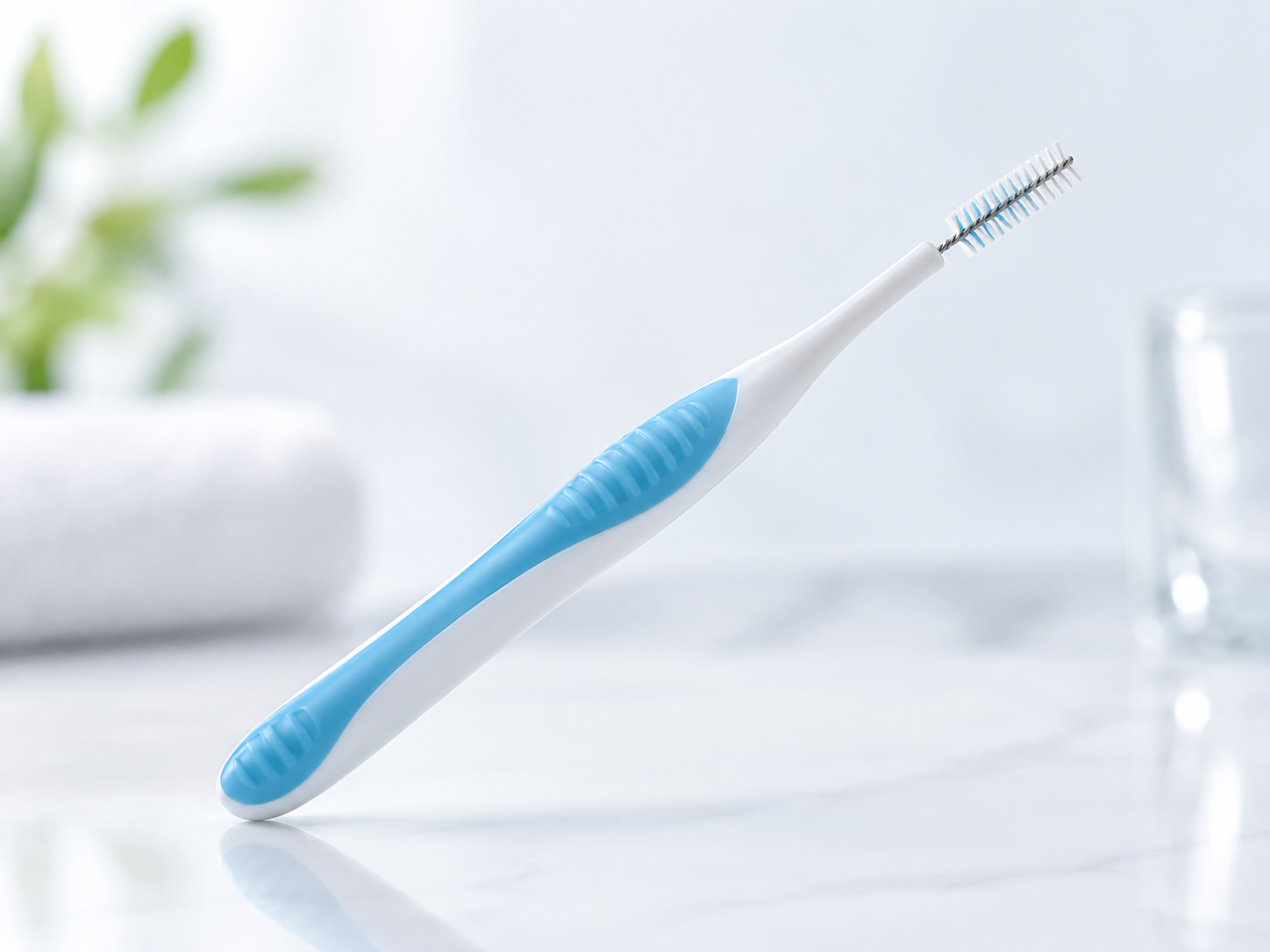
Interdental Brush
A small interdental brush can help clean around brackets, underneath the archwire, and in other hard-to-reach areas.
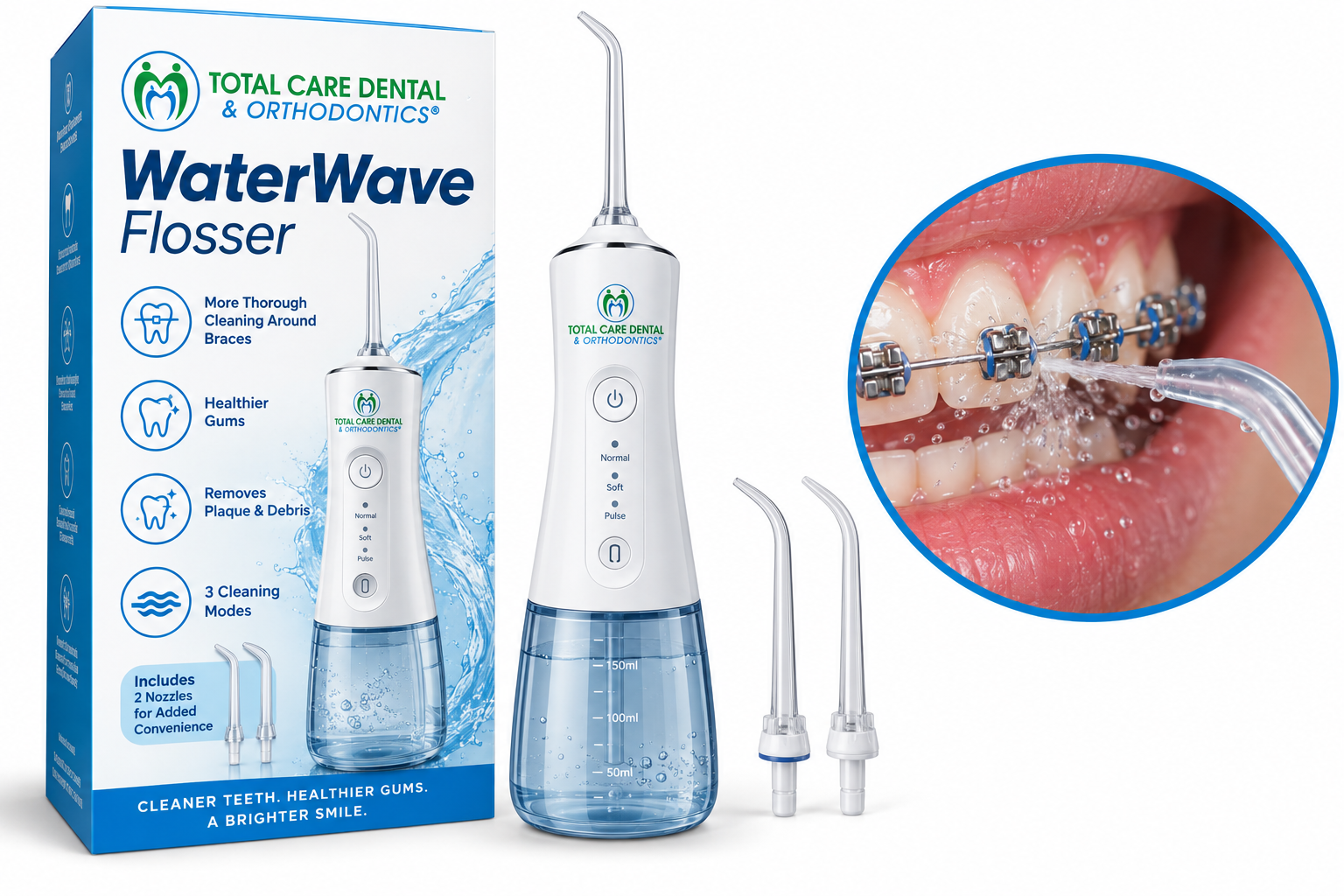
Water Flosser
A water flosser can help remove food and debris from around braces and may be a useful addition to brushing and traditional flossing.
PROTECT YOUR BRACES
Foods and Habits That Can Damage Braces
Avoiding certain foods and habits can help prevent broken brackets, bent wires, and unnecessary treatment delays.
Hard Foods
Avoid biting directly into hard foods such as ice, hard candy, popcorn kernels, and very hard nuts, which can damage brackets or wires.
Sticky or Chewy Foods
Sticky foods such as caramel, taffy, and chewy candy can pull on brackets and become difficult to clean from around braces.
Biting Hard Objects
Avoid chewing on pens, pencils, fingernails, or other hard objects that can place unnecessary pressure on your braces.
Use Care With Crunchy Foods
Foods such as apples, carrots, and crusty bread can often still be enjoyed when cut into smaller pieces instead of bitten into directly.
WHEN TO CONTACT US
Signs Your Teeth or Gums May Need Extra Attention
If you are having trouble keeping your teeth clean during orthodontic treatment, let our team know so we can help.
Bleeding or Swollen Gums
Gums that remain red, swollen, tender, or bleed frequently may be a sign that plaque is building up around the teeth and braces.
Persistent Plaque or Food Buildup
If food and plaque are consistently collecting around brackets or between the teeth, you may benefit from additional cleaning techniques or tools.
White Spots Around Brackets
Chalky or white areas developing around brackets can be an early sign that the enamel is being affected by plaque and acid.
Difficulty Brushing or Flossing
If brushing or flossing around your braces feels difficult, ask our team to show you techniques and tools that can make daily cleaning easier.
RELATED ORTHODONTIC SERVICES
Explore More About Your Orthodontic Care
Learn more about caring for your braces, understanding your orthodontic appliances, and what to do if a problem occurs during treatment.
Parts of Braces
Learn what brackets, wires, bands, elastics, and other orthodontic components do during treatment.
Keep Your Smile Healthy During Orthodontic Treatment
Good oral hygiene helps protect your teeth and gums throughout orthodontic treatment. Our team can help you care for your braces and keep your smile healthy from start to finish.