An early orthodontic evaluation can help identify developing bite, jaw, and tooth-alignment concerns before they become more difficult to manage. Not every child needs early treatment, but screening at the right time can help determine whether monitoring or treatment is recommended.

Children can benefit from an orthodontic evaluation while the jaws and teeth are still developing. An early screening allows the orthodontist to evaluate tooth eruption, jaw growth, bite relationships, and available space for permanent teeth.
In many cases, no immediate treatment is needed. The orthodontist may simply recommend monitoring growth and development over time.

Certain changes in tooth position, bite, or jaw development may be reasons to schedule an orthodontic evaluation.
Limited space can cause permanent teeth to erupt crooked, rotated, or out of position.
The timing of baby tooth loss can sometimes affect how permanent teeth erupt and how much space is available.
An overbite, underbite, crossbite, or open bite may indicate that the teeth or jaws are not developing in the ideal relationship.
Problems with chewing, biting, or the way the teeth come together may be signs that an orthodontic evaluation is appropriate.
Orthodontic screening looks at more than whether the teeth appear straight.
We evaluate how the permanent teeth are developing and whether they appear to have enough room to erupt properly.
The relationship and growth of the upper and lower jaws can affect both tooth alignment and the bite.
We check how the upper and lower teeth fit together and look for developing bite concerns.
Available space is evaluated to help determine whether crowding or other alignment concerns may develop.
Many children who receive an early orthodontic screening do not need treatment right away.
If the teeth and jaws are developing appropriately, the orthodontist may recommend periodic observation until more permanent teeth have erupted. When early treatment is recommended, it is generally because there is a specific developmental or bite concern that may benefit from being addressed while the child is still growing.
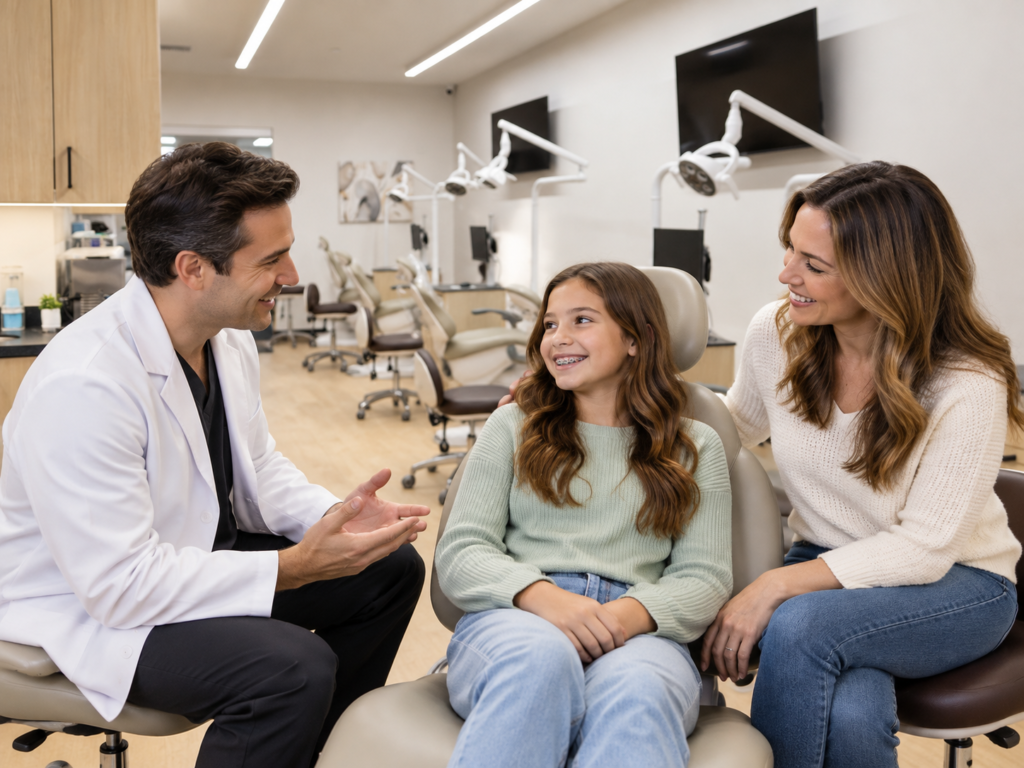
Orthodontic treatment is most effective when it is planned around each patient’s stage of dental development and growth.
Regular orthodontic observation can help track how the jaws, teeth, and bite are developing.
Certain orthodontic concerns may be easier to manage when they are recognized before growth is complete.
Early screening can help determine whether treatment should begin now or be delayed until more permanent teeth have erupted.
Learn more about orthodontic treatment options and the conditions that may affect developing smiles.
Clear aligners may be an alternative to braces for many teens and adults.
Learn about crowding, spacing, bite problems, and other conditions orthodontic treatment may address.
Compare metal braces, crystal clear braces, and clear aligner treatment.
Schedule an orthodontic consultation at Total Care Dental & Orthodontics to evaluate your child’s developing teeth, bite, and jaw growth.
